
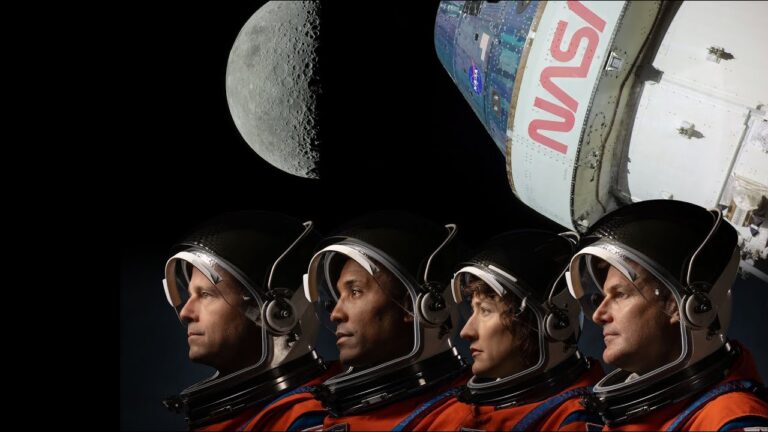


Four astronauts. 10 days. One mission.
NASA’s Artemis II lunar spaceflight mission has been a long-awaited one. After all, it is the first crewed mission beyond low Earth orbit, as well as the first crewed mission around the Moon since Apollo 17 in 1972. Yes, it has been 54 years!
As a reminder, Artemis I was an uncrewed Moon-orbiting mission. Launched in November 2022, it marked NASA’s return to lunar exploration after the conclusion of the Apollo programme five decades earlier.
The crew of four astronauts will lift off on the approximately 10-day Artemis II mission from NASA’s Kennedy Space Centre in Florida. Over the course of about two days, they will check out Orion’s systems and perform a targeting demonstration test relatively close to Earth before then beginning the trek toward the Moon.
NASA announced that it would forgo February’s launch window after a wet dress rehearsal reveal there was a liquid hydrogen leak. The agency said it will aim for March “as the earliest possible launch opportunity.”
But in the meantime, here’s a look at the backgrounds of the four inspiring crew members who are preparing for take-off.
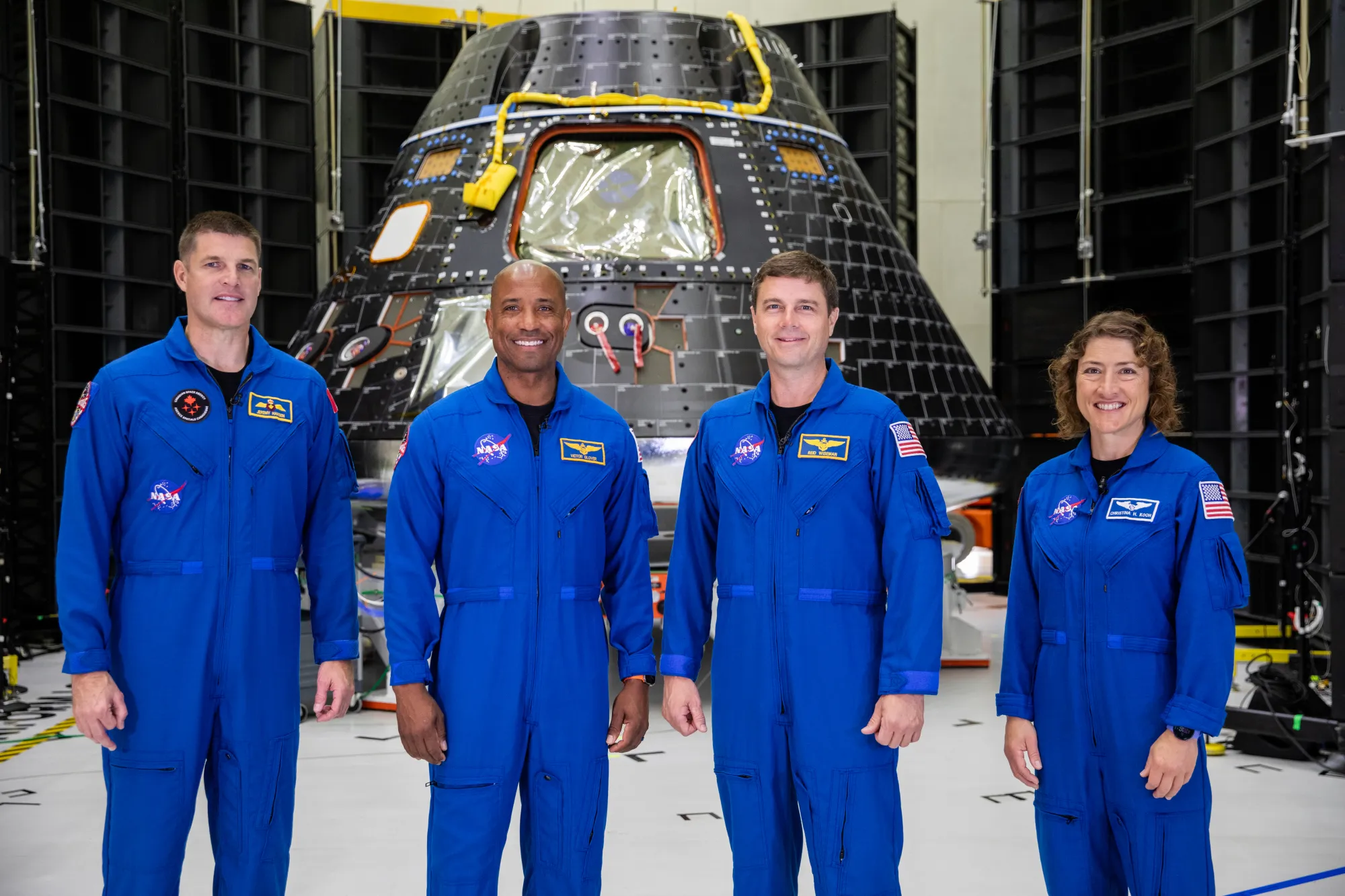
(From left to right) Jeremy Hansen, Victor J. Glover, Reid Wiseman, and Christina Koch make up the four-person crew behind the Artemis II mission. Source: NASA
The education of Artemis II’s crew
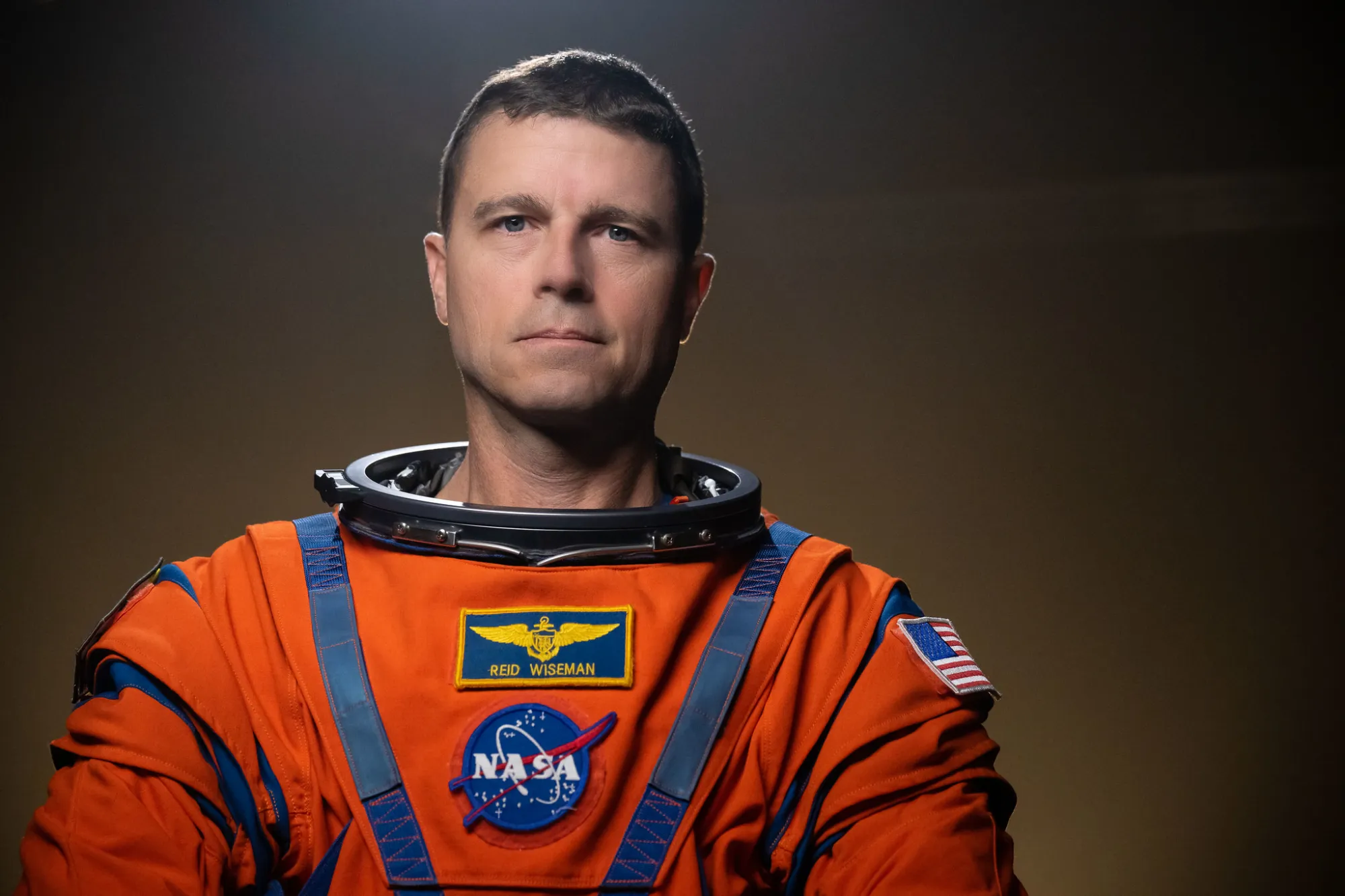
Reid Wiseman is regarded as the first astronaut to tweet live from the International Space Station. Source: NASA
Reid Wiseman
- Degrees:
-
- Bachelor of Science degree in Computer and Systems Engineering from Rensselaer Polytechnic Institute in Troy New York
-
- Master of Science in Systems Engineering from the Johns Hopkins University in Baltimore
-
- Certificate of Space Systems from the US Naval Postgraduate School in Monterey, California
The commander of the Artemis II crew, Reid Wiseman was selected as a NASA astronaut all the way back in 2009. He’s now 50 years old.
He flew previously as a flight engineering aboard the International Station for Expedition 41 from May through November 2014, logging more than 165 days in space. He also served as the chief of the Astronaut Office from December 2020 to November 2022.
Originally from Baltimore, Wiseman’s path to the stars began at Rensselaer Polytechnic Institute, one of America’s oldest engineering schools founded in 1824.
Fascinatingly, Reid was commissioned through the Reserve Officers’ Training Corps (ROTC) following graduation from Rensselaer Polytechnic Institute in 1997. From there, he reported to Pensacola, Florida, for flight training and was designated as a Naval Aviator in 1999.
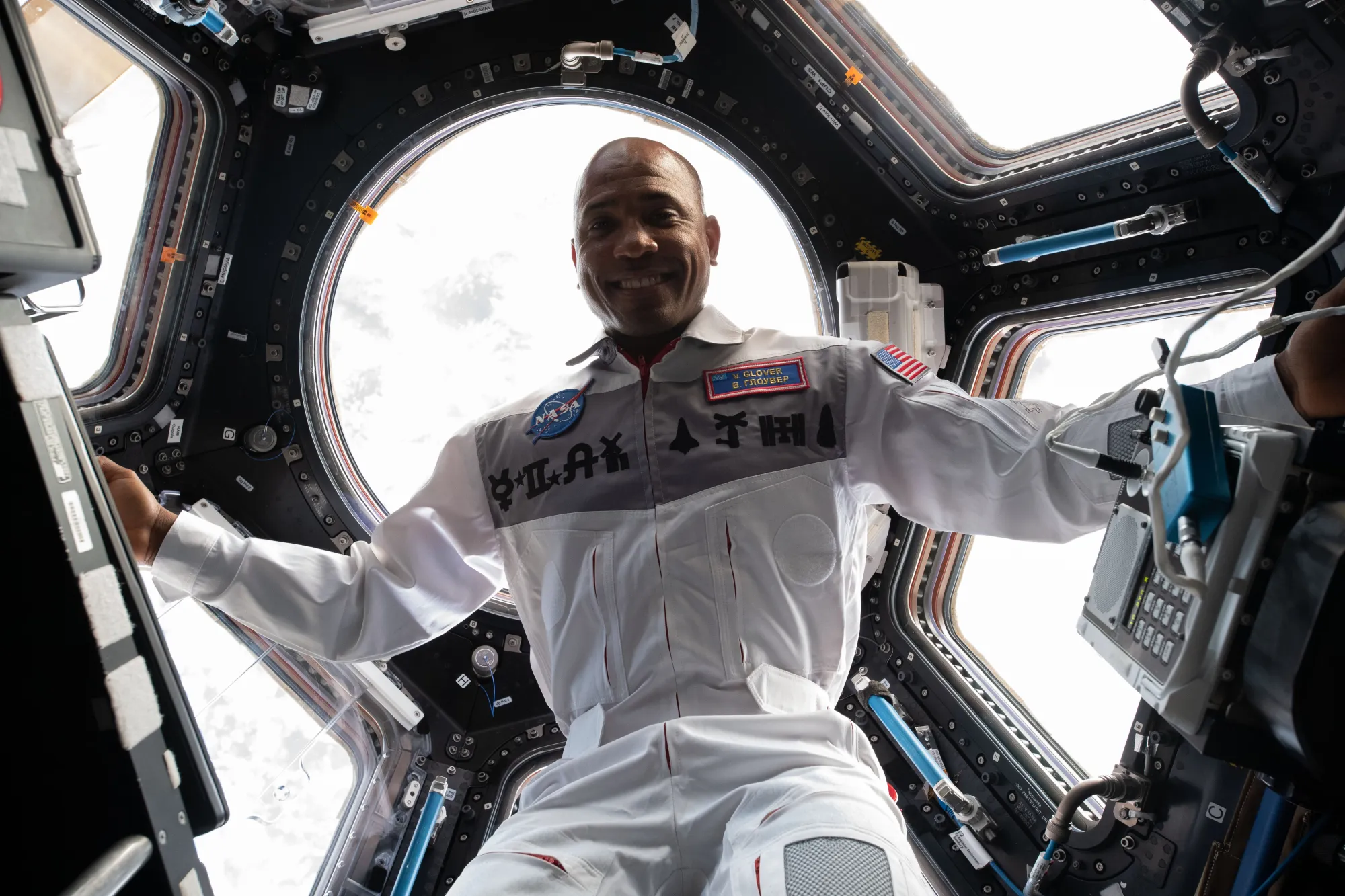
Victor J. Glover will become the first Black person to travel beyond Earth’s orbit on the Artemis II mission. Source: NASA
Victor J Glover
- Degrees:
-
- Bachelor of Science in General Engineering from California Polytechnic State University
-
- Master of Science in Flight Test Engineering from Air University in Edwards Air Force Base, California
-
- Master of Science in Systems Engineering from Naval Postgraduate School
-
- Master of Military Operational Art and Science from Air University in Montgomery, Alabama
The pilot of the Artemis II mission, Victor J. Glover, was selected as a NASA astronaut in 2013 and previously served as the pilot of NASA’s SpaceX Crew-1 mission to the International Space Station as part of Expedition 64. He participated in four spacewalks and spent some 168 days in space.
Born in Pomona, California, Glover’s impressive academic journey included multiple degrees from Air University — the US Air Force’s premier institution for professional military education (PME). Established in 1946, Air University provides comprehensive education, training, and research for Air Force and Space Force personnel.
Glover’s time at Edwards Air Force Base, home to legendary test pilot programmes, positioned him perfectly for his future role testing the boundaries of human spaceflight.
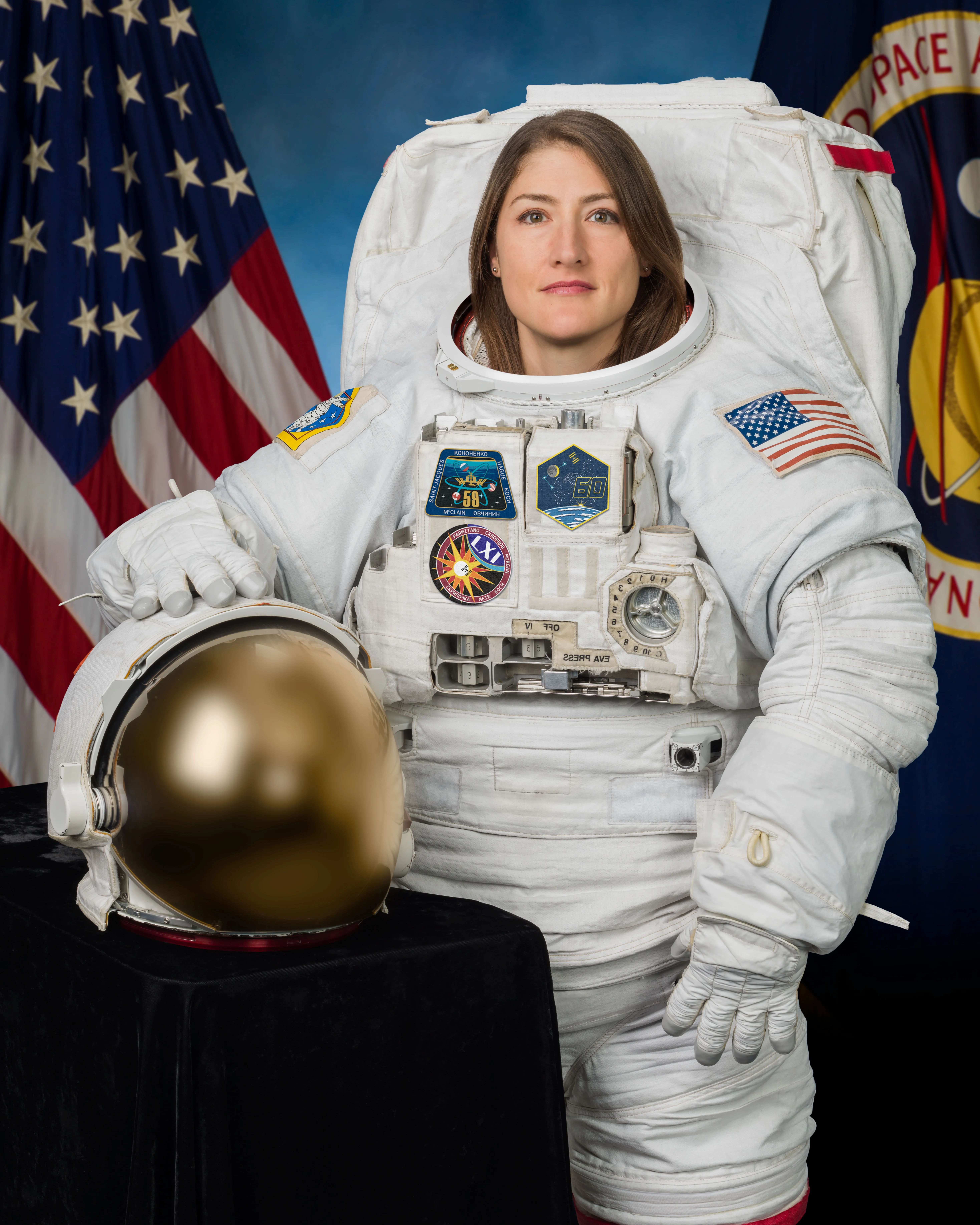
She will be the first woman to go to the moon with the Artemis II mission. Source: NASA
Christina Koch
- Degrees:
-
- Bachelor of Science in Electrical Engineering from North Carolina State University in Raleigh, North Carolina
-
- Bachelor of Science in Physics from North Carolina State University in Raleigh, North Carolina
-
- Master of Science in Electrical Engineering from the University of Ghana
-
- Honorary PhD from North Carolina State University
Mission specialist Christina Koch became an astronaut in 2013.
The 47-year-old had lived and worked in the International Space Station for almost all of 2019 in Expeditions 59, 60, and 61. For the Artemis II mission, she flew on the Russian Soyuz rocket and trained extensively in Russia. Christina spent a total of 328 consecutive days in space and participated in the first all-female spacewalks.
She served as Branch Chief of the Assigned Crew Branch in the Astronaut Office and did a rotation as Assistant for Technical Integration for the Center Director at NASA’s Johnson Space Center.
Prior to becoming an astronaut, Christina’s experience spanned both space science mission instrument development and remote scientific field engineering in the Antarctic and Arctic. Her unique educational background includes studying abroad at the University of Ghana, making her one of the few astronauts to have pursued graduate studies in Africa. This international perspective complemented her technical training and prepared her for the intensive cross-cultural collaboration required during her Russian Soyuz training and ISS missions.
View this post on Instagram
Jeremy Hansen
- Degrees:
-
- Bachelor of Science in Space Science from the Royal Military College of Canada (RMC) in Kingston, Ontario
-
- Master of Science in Physics from the Royal Military College of Canada (RMC) in Kingston, Ontario
The only Canadian on the Artemis II mission, Jeremy Hansen is a mission specialist from the Canadian Space Agency (CSA). He will become the first Canadian to ever venture to the Moon.
Fifty years old this year, Hansen is originally from London, Ontario and has a background as a fighter pilot. At the age of 12, Hansen had already joined the 614 Royal Canadian Air Cadet Squadron, launching him into the world of aviation.
He was selected by the CSA in 2009 as one of two recruits and has been participating in various interesting training programmes. For instance, he did cave training with the European Space Agency and underwater habitat missions (through the NASA Extreme Environment Mission Operations, known as NEEMO) to simulate space environments.
He has also served as Served as a CAPCOM (capsule communicator) at NASA Mission Control and was the first Canadian to instruct a NASA astronaut class.
What do you need to study to go to space?
Clearly, these astronauts have quite the stacked resume. What have astronauts historically studied, though?
| Astronaut | Undergraduate Degree(s) | Graduate Degree(s) | Notable Details |
| Neil Armstrong | B.S. in Aeronautical Engineering, Purdue University | M.S. in Aerospace Engineering, University of Southern California | Studies began in 1947 but were interrupted by service as a US Navy pilot in the Korean War |
| Buzz Aldrin | B.S. in Mechanical Engineering, US Military Academy at West Point | Sc.D. in Astronautics, MIT | Doctoral thesis: “Line-of-Sight Guidance Techniques for Manned Orbital Rendezvous” on spacecraft docking |
| Scott Kelly | B.S. in Electrical Engineering, State University of New York Maritime College | M.S. in Aviation Systems, University of Tennessee | Participated in NASA’s Twins Study with identical twin brother Mark Kelly (also an astronaut) |
| Mae Jemison | B.S. in Chemical Engineering and B.A. in African American Studies, Stanford University | M.D., Cornell University | First Black woman in space |
As you can tell from all these astronauts, it’s required for one to study a STEM subject prior rocketing into space.
Specifically, NASA has published a list of requirements for their astronauts. Note that this was published in 2020, and that astronaut requirements can always change along with the agency’s goals and missions:
- Be a US citizen (clearly Jeremy Hansen is an exception)
- Possess a master’s degree in a STEM field, including engineering, biological science, physical science, computer science, or mathematics, from an accredited institution.
- Have at least two years of related professional experience obtained after degree completion or at least 1,000 hours pilot-in-command time on jet aircraft.
- Be able to pass the NASA long-duration flight astronaut physical.
The master’s degree requirement can also be met by:
- Two years (about 36 semester hours or 54 quarter hours) of work toward a doctoral programme in a related STEM field.
- A completed Doctor of Medicine or Doctor of Osteopathic Medicine degree.
- Completion (or current enrolment with a timely expected completion) of a nationally recognised test pilot school programme.
Astronaut candidates must also have skills in leadership, teamwork and communications.
Space travel is admittedly still in very nascent stages, but progress over the years has been persistent. To further cross this final frontier, space agencies across the globe will need more astronauts to crew spacecrafts.
So, if you’re dreaming of space travel, don’t give up yet. With the right education and efforts, you might just find yourself orbiting earth, landing on the surface of the moon, or even journey to Mars.
We wish the Artemis II crew a safe journey to the moon and back!