
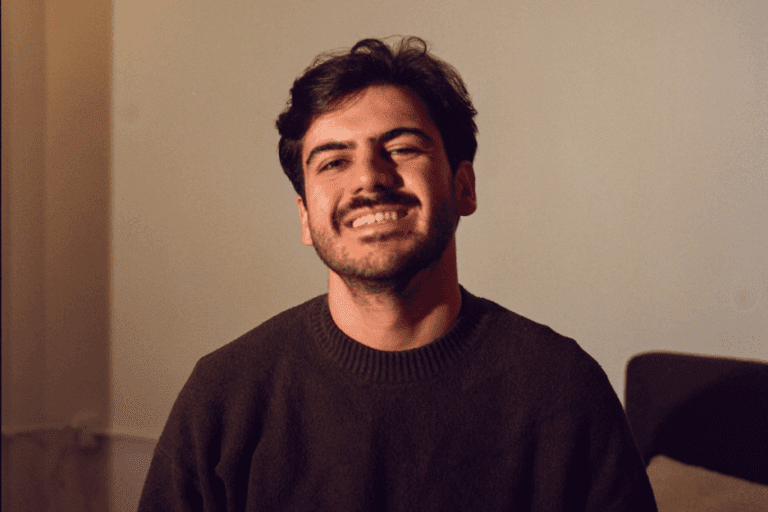


The images that bear Marco Postigo Storel’s name have graced some of journalism’s most hallowed pages — The New York Times, Associated Press, NPR. His lens has earned him a College Photographer of the Year 79 Award of Excellence in the Portrait Category and landed his work among the Associated Press’s most striking photographs of 2024.
But the hands that now capture history in motion once had a different calling entirely. They were once destined for the basketball court, not the camera.
Coming to America with dreams of playing basketball
Before a camera became a permanent fixture in his hands, Storel used to busy them with holding a basketball.
He grew up playing the sport and had been playing professionally for two years when he decided to broaden his horizons in the US and get proper training at a school.
So, he found a post-graduation basketball team in Florida, where he trained for the next three months. His team of 15 people were placed in two apartments with three rooms each.
“It was a lot of dudes in each apartment,” he recalls. “It got to a point that there were like nine people living in the same apartments. It’s not a great condition, you know, but I kind of had some fun. I tell people like that we were kids, like we were just doing what like.”
But two months in, things unravelled. The promised practice sessions with university teams never materialised. The person who was supposed to help him secure scholarships simply disappeared — ignoring texts and emails completely. Storel wasn’t the only victim; the coach and other players were scammed too.
He had already invested 15 years in basketball by that point, and the demanding athlete’s lifestyle was wearing on him. With basketball always taking priority, he frequently had to miss social activities and other experiences.
Journalism had already captivated him, so he decided to pivot 100%. The University of Missouri-Columbia, home to one of the oldest formal journalism schools in the world, caught his attention. When he visited, he fell in love with the institution.
“People were just really nice. It was totally a different world from for me, coming from São Paulo,” he says. “So I applied and ended up like really liking it.”
With that, Marco became one of the tens of thousands of Brazilian students studying in the US. As of 2023-2024, Brazil was one of 10 countries that account for the greatest number of international students in the US, with over 16,000 students in the country.
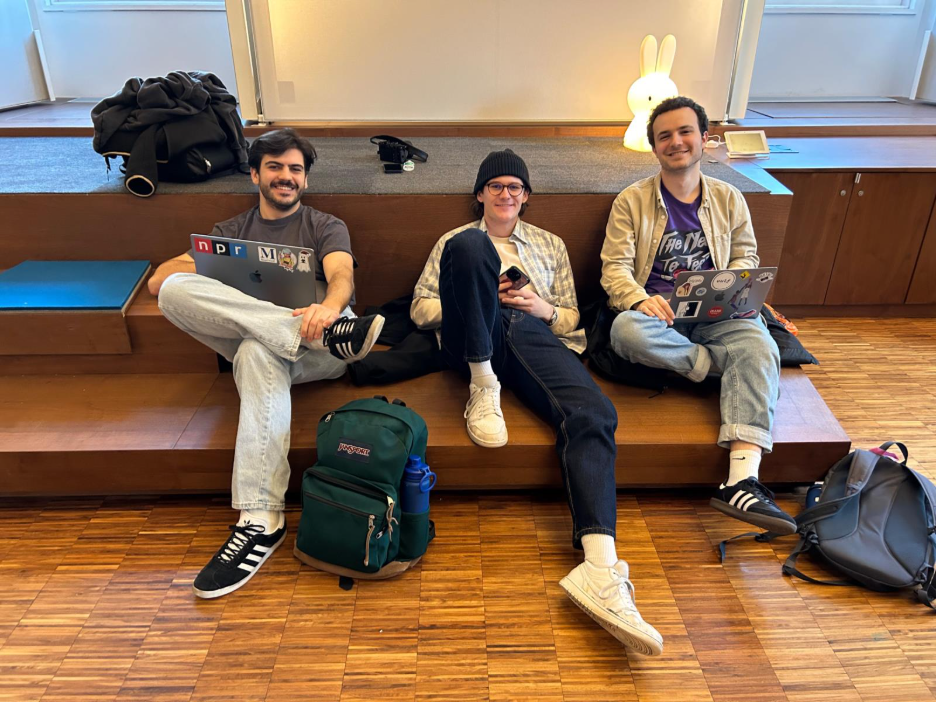
Storel (right) working with his friends at the University of Missouri. Source: Marco Postigo Storel
Going behind the lens
Before attending the University of Missouri, Storel had never even been properly exposed to a camera.
“I was not familiar with it at all. Like I knew my mum used to take photos of me playing basketball but not like I was not even interested in that,” he says.
But he started growing an interest in the field during the end of his freshman year – and it wasn’t even because of a class, just a Brazilian who had been to Yemen and Libya as a war journalist.
“It was like, so random,” he says.
He eventually learnt that wars as subjects weren’t for him, but that video opened the floodgates for his interest in photography.
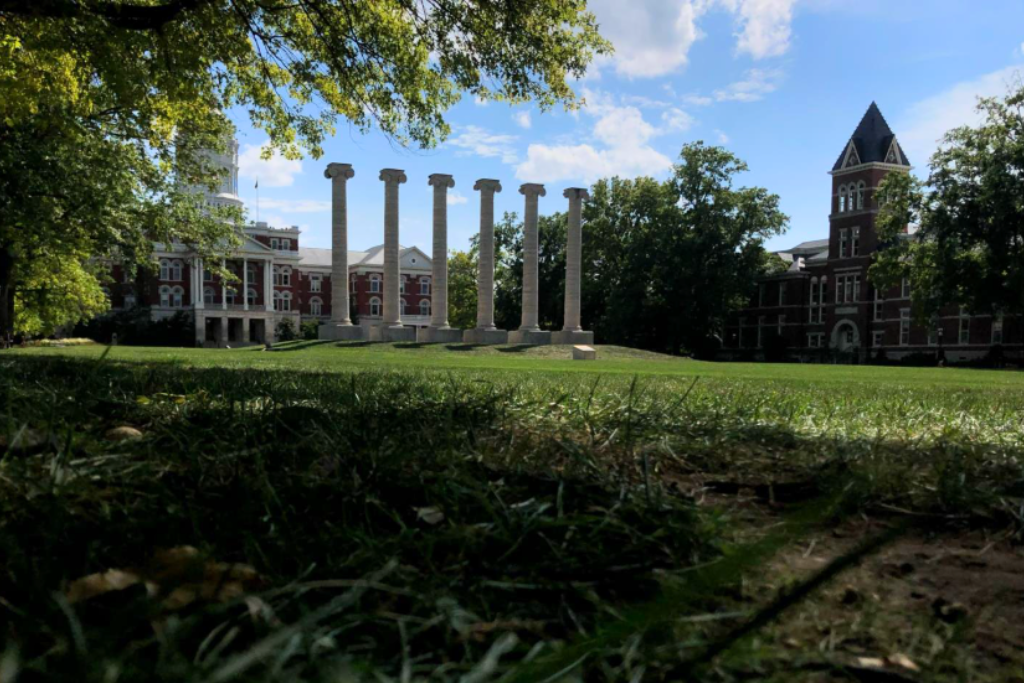
A picture of the famous columns at the University of Missouri-Columbia. Source: Marco Postigo Storel
Is it ever too late to change courses?
From there, he applied to the school newspaper and began photographing for various assignments, such as sports games.
“I started liking it and bought my own camera, and played with it a lot,” he says. “But it was kind of late compared to other people.”
It didn’t matter. Over the course of four years, he honed his skills in photojournalism, picking up the technical know-how as well as the more nuanced elements of capturing stories.
Immediately after graduating at Mizzou, Storel went on to get a job with NPR, also known as the National Public Radio, an American public broadcasting organisation. However, it was only a temporary job because they couldn’t sponsor his visa. Not wanting to go home just yet, he began applying to graduate school.
The best option was Columbia University in New York.
And the best part? A full ride scholarship.
Beyond the quality education he obtained there, studying in New York also granted him plenty of networking opportunities that he doesn’t believe he would get anywhere else.
Being a graduate from Columbia University and working as a photojournalist certainly wasn’t his plan when Storel first came to America. At the end of the day, though, all of his experiences have led him to where he is today.
Although his basketball career never quite worked out, he was able to channel lessons learnt from the experience. Waking up early, for one, has fostered discipline. As a team sport, it also taught him how to work with others.
“I understand, hey, if you don’t do your job, they’re not going to be able to succeed,” he says.
That experience also imparted lots of people skills on him, allowing him to not only communicate with peers but also sources and subjects.