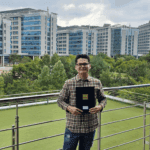

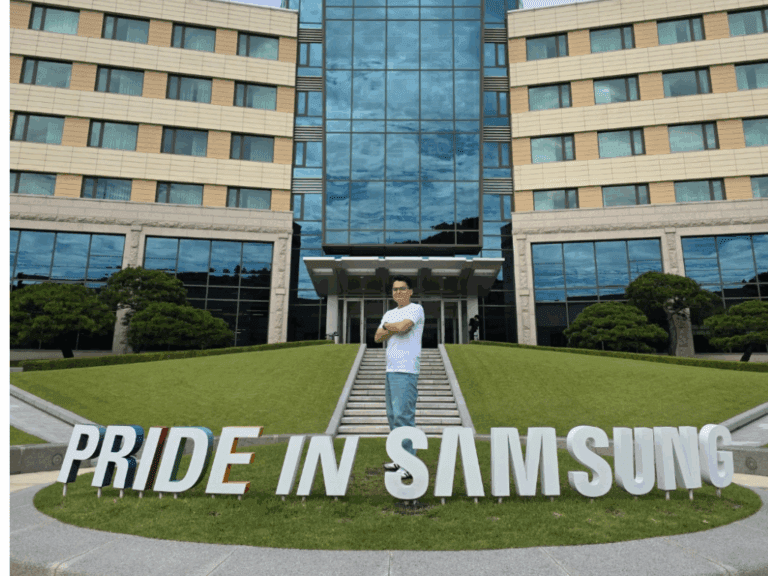


Working for one of the world’s top conglomerates is a big flex — and Doniyor Khudoyarov has earned that right.
It has only been three months since he started his journey, but the entire process of him landing a job at Samsung took six years of dedication, marked by late nights, research, exams, learning a new language, failures, joy, resilience, and growth.
Basically — blood, sweat, and tears.
“When I moved to South Korea for my undergrad and master’s, my main goal was to work for a big corporation,” Doniyor shares. “I am here as a foreigner, and I should aim big, so I only applied to big companies such as LG, Samsung, and SK, and specifically Samsung Electro-Mechanics, as it’s kind of related to my major in chemical engineering.”

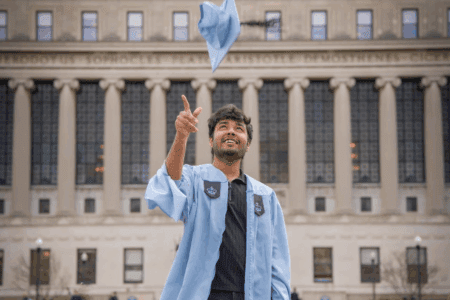
Doniyor also holds a Bachelor’s degree in Chemical Engineering and Business Management from Ulsan National Institute of Science and Technology. Source: Doniyor Khudoyarov
It was meant to be
Applying for a job in South Korea often means taking the TOPIK exam — the Korean language proficiency test.
For Doniyor, the timing wasn’t ideal. His TOPIK results were still pending during the application process, and several companies turned him down because of it.
“I didn’t have the TOPIK results at the time of recruitment, and I was rejected from other bigger companies,” he recalls. “However, Samsung allowed me to submit my results at the end of the requirement, which was towards the end of my master’s degree.”
In September 2025, after completing his Master’s in Energy and Chemical Engineering from Ulsan National Institute of Science and Technology, Khudoyarov started working for Samsung Electro-Mechanics in Busan.
“There are many sectors within Samsung, but I chose Electro-Mechanics as it’s related to my research field,” he shares. “And I chose Busan as it’s close to Ulsan, where I have lived for six years. It’s a wonderful city to be in, and it’s the best place to be for manufacturing production.”
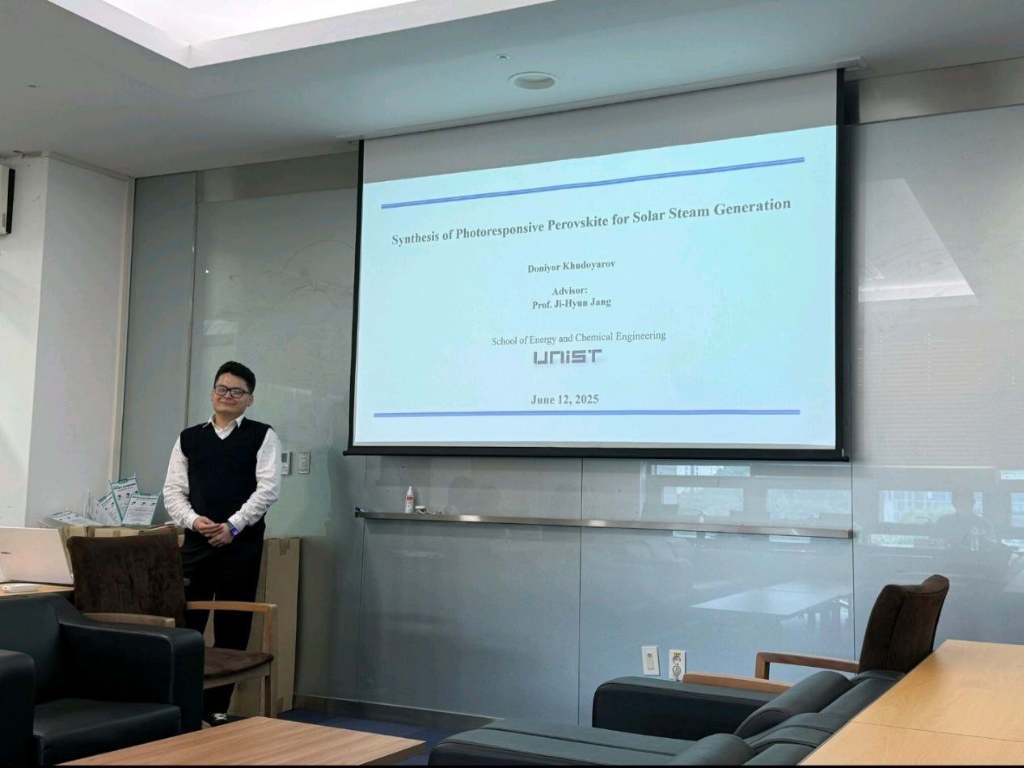
Doniyor speaks six languages: English, Korean, Russian, Uzbek, Tajik, and Turkish. Source: Doniyor Khudoyarov
Here’s how you can get a job at Samsung (or any big Korean company)
Scoring a job at Samsung — or any major conglomerate — isn’t a walk in the park.
Back in 2012, 700 foreigners from 47 countries applied for roles at Samsung. While there’s no updated figure, it’s safe to say competition has only grown fiercer.
As of 2025, Samsung employs roughly 125,000 people in South Korea and plans to recruit about 12,000 new employees every year until 2030 — meaning job opportunities in Samsung are abundant, but competition is intense.
So how do you stand out in the crowd?
Must-haves to shine
Getting a job in South Korea is competitive — sometimes you’re up against hundreds for a single role. The key? Skill and preparation.
“A solid, clear résumé is essential,” says Doniyor. “Highlight your academic and work experience, especially if it connects to the company’s field.”
He found success by mentioning his university and specialisation — showing interviewers he understood the industry and could adapt to Korean corporate culture.
“For engineering-related jobs, internships, research, and published papers make a big difference,” he adds. “Attending conferences also helps with networking and staying updated on trends.”
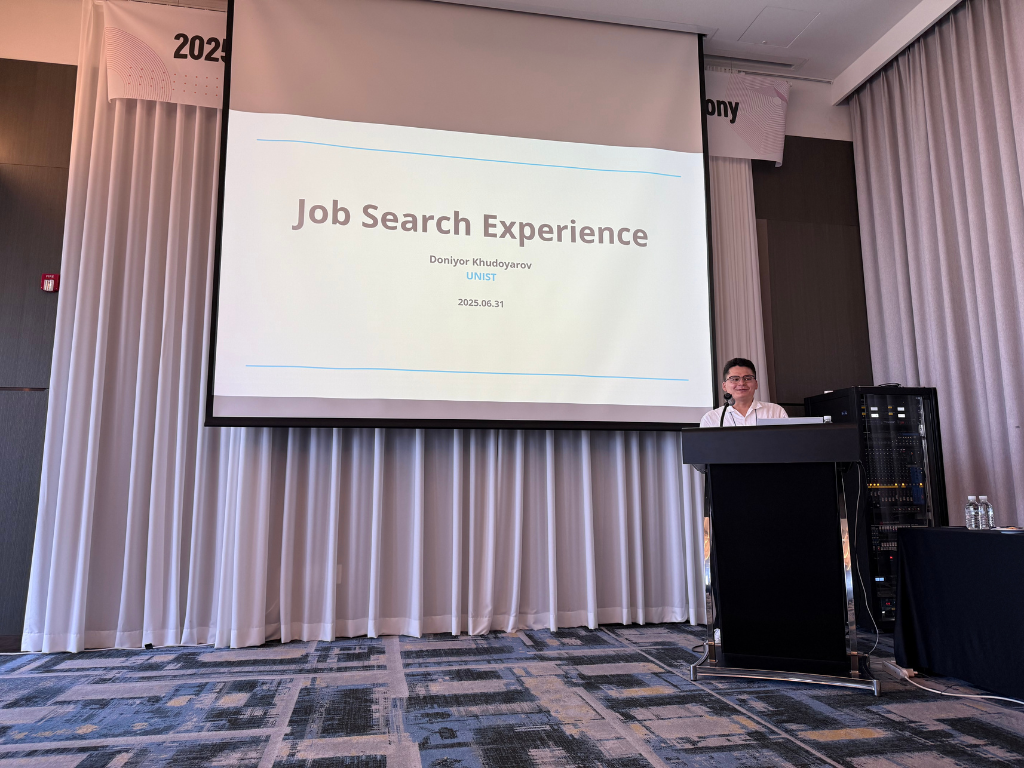
During his time at UNIST, Doniyor participated in several research internships, which helped boost his resume. Source: Doniyor Khudoyarov
You’ll have both technical skills and soft skills
Strong fundamentals in engineering are a must, Doniyor emphasises.
“Six years of studying in undergrad and grad school gives you a solid base,” he says. “But real-world work is different. In university, you focus on theory and research; in the workplace, you think about customers and company goals.”
Big companies like Samsung don’t expect fresh grads to revolutionise processes overnight — they train you to grow within the system. “You’ll learn step by step,” he notes. “In a few years, you’ll become a true professional.”
A go-getter mindset is the best mindset
Doniyor’s strategy was simple: think big and stay consistent.
“As an international student, having a master’s degree helps — big companies value experience, and a master’s is often seen as two years of job experience,” he says.
Though he once considered moving abroad for further studies, he chose to stay. Learning a new language, system, and culture elsewhere would’ve been a setback — staying in South Korea kept him closer to his dream.
“I’m truly grateful to everyone who supported me along the way: my family, my university friends, and my research colleagues. I couldn’t have done it without you,” he shares.
Doniyor’s story proves that if you stay focused, work hard, and keep learning, landing a job at Samsung — or any top-tier job in South Korea — is absolutely within reach.