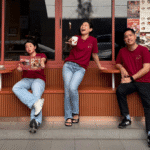

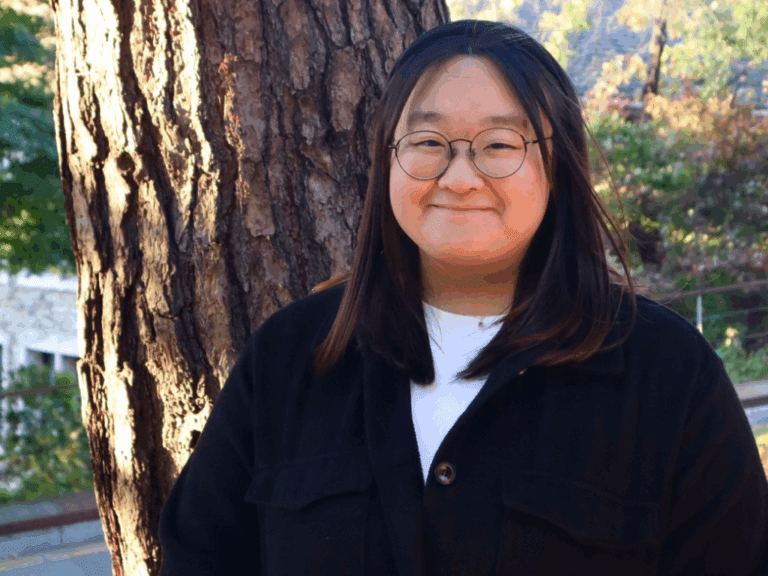


As glamorous as people make it out to be, studying in South Korea can be incredibly lonely and isolating — and I’m a testament to this.
The language barrier is a significant contributing factor to feelings of loneliness, as well as the homogenous culture. The majority of my friends were Malaysians or Americans. It was only towards the end of my time there that I made about 15 Korean friends through K-pop; however, today, I’m only in touch with three of them.
Building a community for myself was hard, especially when most of my friends were attending different universities and we’d only see each other during K-pop events. On campus, I was the only Malaysian — and that made it even more isolating.
For Noorin Ansari, a former international student at Korea University, the sentiment is the same.
“I really struggled with loneliness when I was studying in South Korea,” says Ansari. “I think it’s common for every international student to feel it, but it’s on a whole new level in South Korea.”
Natasha Elyssa Gadjalim, an international student at Yonsei University, too, shares the same sentiments:
“Korea can be a very isolating landscape, and I’d say it’s more or less due to the individualistic nature of Koreans. I’m also the type of person who thrives on genuine, deep connections. During my freshman year, it felt like I knew everyone, but not on a deep level. That doesn’t mean that I’m not close friends with them, I am, but I still felt very lonely.”

Gadjali was born and raised in Indonesia, but grew up around South Korean culture due to her family having South Korean ancestry. Source: Natasha Elyssa Gadjali
Let’s add microgression into the mix of struggles
The feeling of loneliness and isolation isn’t the only struggle international students face — facing microaggressions was almost a daily occurrence for many, especially if you’re from Southeast Asia.
“Many Koreans think Indonesians are factory workers,” says Gadjali. “When I talk to people around me or even taxi drivers, there are little microaggressions. It’s not even coming from a place of bad intent. They’ll comment things like, ‘Oh, you’re Indonesian, you must be a factory worker.”
I, myself, had experienced microaggressions. Many would say I’m too dark for a Chinese, or even straight-up refuse to acknowledge I’m Malaysian and insist I’m from the Philippines.
The worst was having no one willing to sit next to me, despite the train being full. They would even whisper, saying that they don’t want to sit next to the 외국인 (foreigner) — me.
“I had a friend who’s Mongolian, and when she met her Korean roommate, the roommate said, ‘Oh, you must have excellent eyesight,’” Gadjali shares.
They found it odd because, never in their lives, had Mongolians been thought to have good eyesight. Gadjali did her research and found out that it was solely due to Korean history.
“That’s why Mongolians are generally thought to have perfect eyesight because of Genghis Khan,” she sighs.

Gadjali at the Career Networking Event, “The Curator’s Playbook”, hosted by the Yonsei-Indonesian Association. Source: Natasha Elyssa Gadjali
That’s not all. Indonesians and other Southeast Asians often face administrative discrimination.
“Yonsei tries their best to disseminate knowledge and information in English, but at the end of the day, it’s still mostly in Korean,” Gadjali shares. “While I’d say my Korean is on the intermediate level, there are many who aren’t as they’re still learning to master the language. It’s hard to feel included.”
Even when it comes to the Alien Registration Card (ARC), Indonesians have a limitation. “Due to our passports, we’re only given one year, while other nationalities have two.,” she says. “So on top of other worries, we have to navigate this.”
For Ansari and me, a way to face microaggressions was just to wave them off, or even laugh at them. But for Gadjalim, it sparked something in her; she wanted to take action.

Gadjali and members of the Yonsei-Indonesian Association. Source: Natasha Elyssa Gadjali
Building a community that’s safe for everyone, while sharing Indonesian culture
The answer was simple — building a community or a student association that was safe for not only Indonesians but also for all nationalities.
“It was during my sophomore year that a couple of Indonesians and I decided to start a student association officially,” says Gadjalim. “I still felt loneliness despite the large Indonesian community, and facing the microaggression, we needed to have a community where everyone can feel safe and get any type of information when needed.”
There were several international student associations, but none specifically for Indonesians, despite the large number of Indonesians attending Yonsei.
In 2023, alongside her co-founders, the Yonsei-Indonesia Association (YIA) was born.

Gadjali and members of the Yonsei-Indonesian Association at “The Curator’s Playbook” event. Source: Natasha Elyssa Gadjali
“It was first started to create a safe space for Indonesian students to connect with other Indonesians, but over time, we wanted to start sharing what Indonesian culture is like,” she says.
The thing is, the Indonesian embassy in Seoul is already doing just that, offering cultural events to share what Indonesian culture’s like. However, for YIA, it’s about sharing the culture of warmth and acceptance that Indonesians are known for.
“That’s why we are opening the club to other nationalities, rather than being closed off,” Gadjali shares. “You can’t show the warmth and acceptance Indonesians have with the world if you’re going to be closed off. Yes, they can watch it from outside of the club, but we want to let people in and experience it themselves.”
It may have been an unconventional way of sharing one’s culture, but in Yonsei, it worked.
In 2024, Gadjali was elected to a second term as President. Until the last day as President, the association was composed of 80% Indonesians, 10% Koreans, 5% Americans, and 5% Japanese.
Popular stories
Winter Olympics: Where and what the 12 smartest athletes studied

This Malaysian scored British Council’s Women in STEM scholarship to further cancer research

What do you need to study to work in F&B? A culinary management grad answers

Behind this Malaysian cafe is 3 friends who met while studying in Australia