



For most students, no matter how much they love their university, there are some downsides. Long commutes, budgeting, making friends, and getting used to a new accent. The list goes on and on.
But not for Sovichea Saron from Kakab, Cambodia. After moving to Phnom Penh to study a Bachelor’s in Business Administration at Paragon International University, his academic journey took an exciting turn when he got to study in US.
He was accepted into the Global Undergraduate Exchange Programme (Global UGRAD), which took him to Georgia College & State University.
He loved every moment of his time abroad, both in and out of the university. “I would like to think that Georgia College picked me because it was the perfect campus for myself.”
Pretty ironic, since Saron didn’t get to pick where he could study. Placements are done according to a student’s academic interests and their interest in the US in general.
Saron felt lucky as someone he knew from Laos got placed in Alaska.
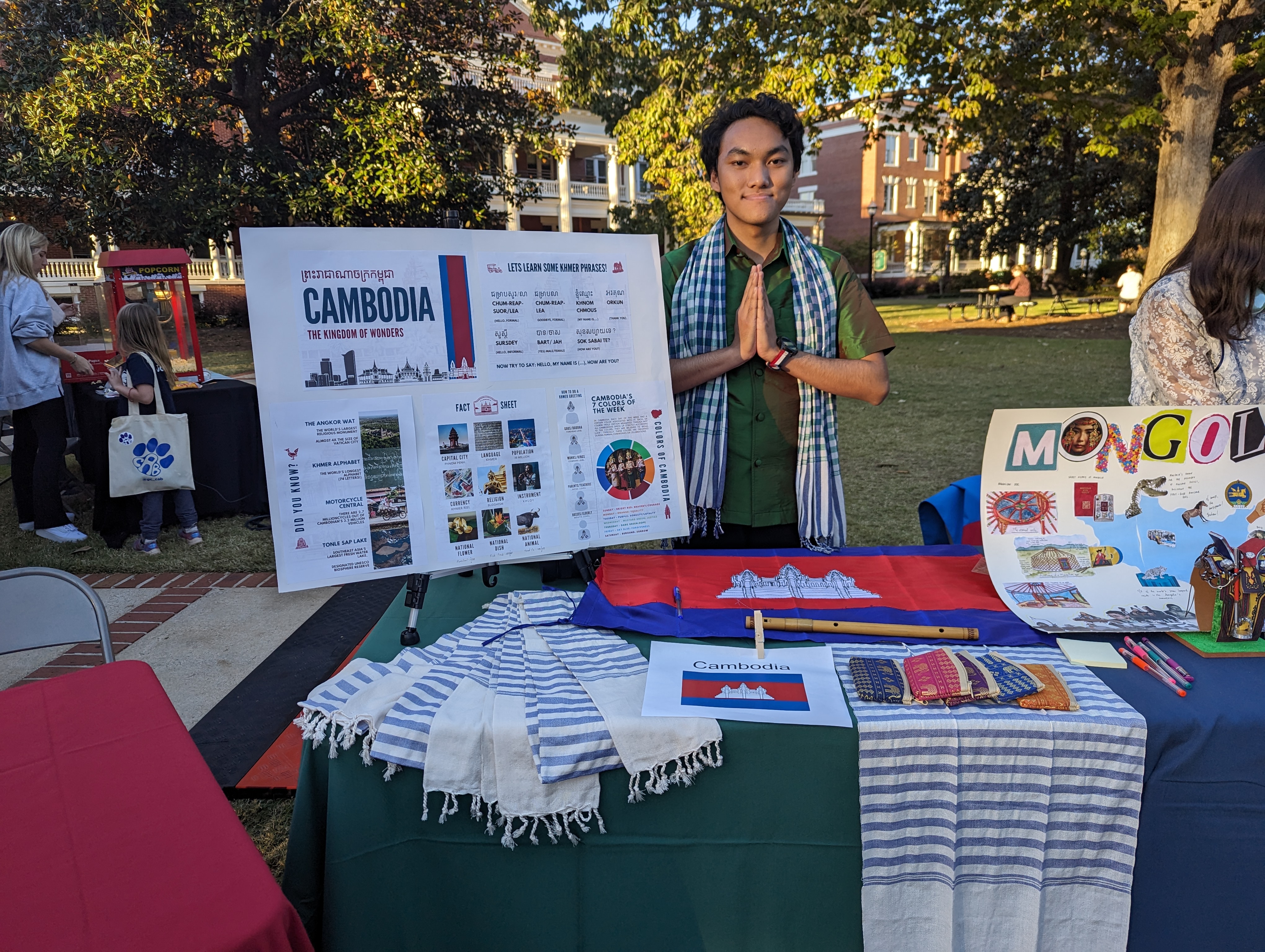
Saron’s study in US wasn’t just about academics. He also represented Cambodia at Georgia College’s International Festival. Source: Sovichea Saron
What an education in the US South is like
Most international students who study in US typically head for major states like Seattle, California, Boston, and New York. Georgia doesn’t really come up much.
Saron himself went with no expectations, because getting into the programme was based purely on luck.
Looking back, he wouldn’t trade the experience for anything.
“Leaving home for the first time was very difficult. A lot of shed tears, a lot of stressful nights. But little did I know, it would change my life forever.”
Georgia College is a public liberal arts university in Milledgeville, Georgia. A quick Google search and you would find that it is a college town with rich history and natural beauty.
But ask Saron and he has so much more to say.
“Coming from Asia, we often hear that the American South is a conservative place with a lot of discrimination,” he says. “But that couldn’t be further from my experience. People were so friendly and kind. That’s what really made Milledgeville feel like home.”
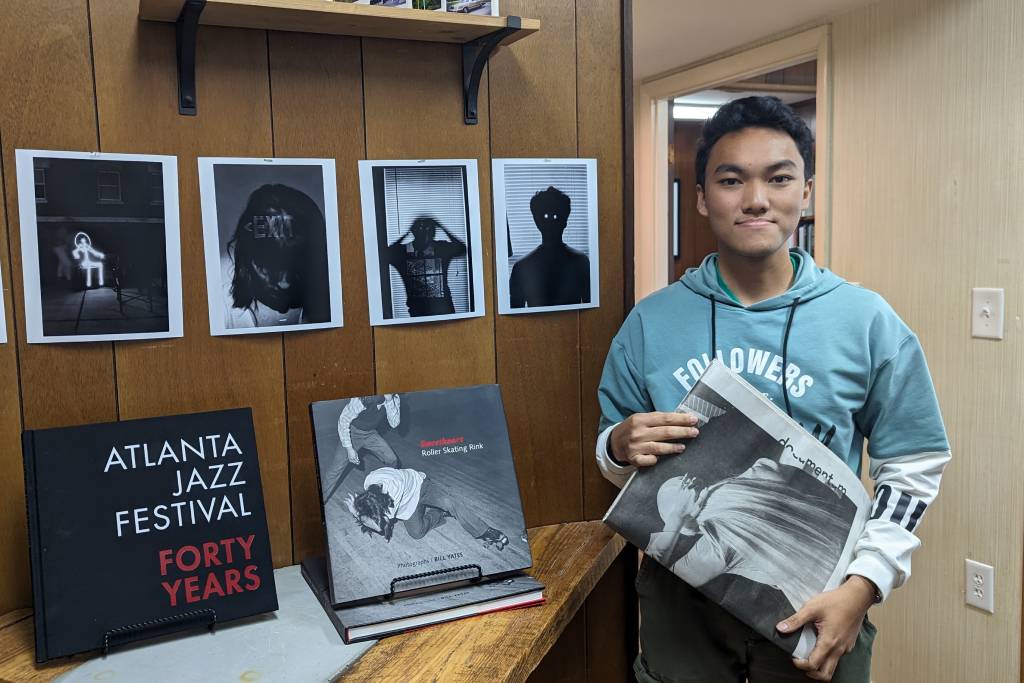
With the skills he learned from the photography class he took during his study in US, Saron got second place at a local photography competition. Source: Sovichea Saron
What’s it like studying at Georgia College & State University
Saron’s study in US and Cambodia experiences gave him a front-row seat to how different education systems can be.
In the US, classes are more interactive and students are encouraged to ask a lot of questions and challenge ideas.
In Cambodia, things were more formal. “You sit; you listen,” he says.
“Even if the instructor says something completely off, nobody questions it. It’s just not part of the mindset — probably true for a lot of places in Asia.”
Interestingly, Saron found the academic pressure during his study in US to be lighter:
“I’m not saying the lessons were easy, but compared to Cambodia, I felt like we weren’t judged or graded as strictly. It felt more relaxed.”
Saron took two business courses and two related to American culture and history.
1. Business ethics
The business ethics course is exactly what you’d expect — a lot of theories and complex ethical frameworks and standards.
“But our professor, Dr. Nicholas Creole, made it work,” says Saron. “We discussed what’s ethical and what’s not. It was way more engaging than I expected from such a theory-heavy course.”
2. Social media marketing
Social media marketing might seem like learning how to post a reel or schedule tweets, but it’s so much more than that.
Saron learned about consumer behaviour, general marketing strategies, and the psychology behind why people buy.
“Some days, Dr. Anya would have us talk about trending news or analyse real campaigns. It was one of the most insightful classes I’ve ever taken,” he says.
3. Jazz history
Saron has always loved music and Dr. Don’s love for jazz made it even more fun.
But the best part? He got to attend performances, student orchestras, and local jazz performances in the bar downtown.
4. Black and white photography
Hands down, Saron’s favourite course during his study in US was black and white photography. He learned processing, editing, exposure, and got to really explore Milledgeville.
“Those moments turned into some of the best memories, especially since I was doing it with my friends. Now, I proudly keep my photos and film on display at home” he says.
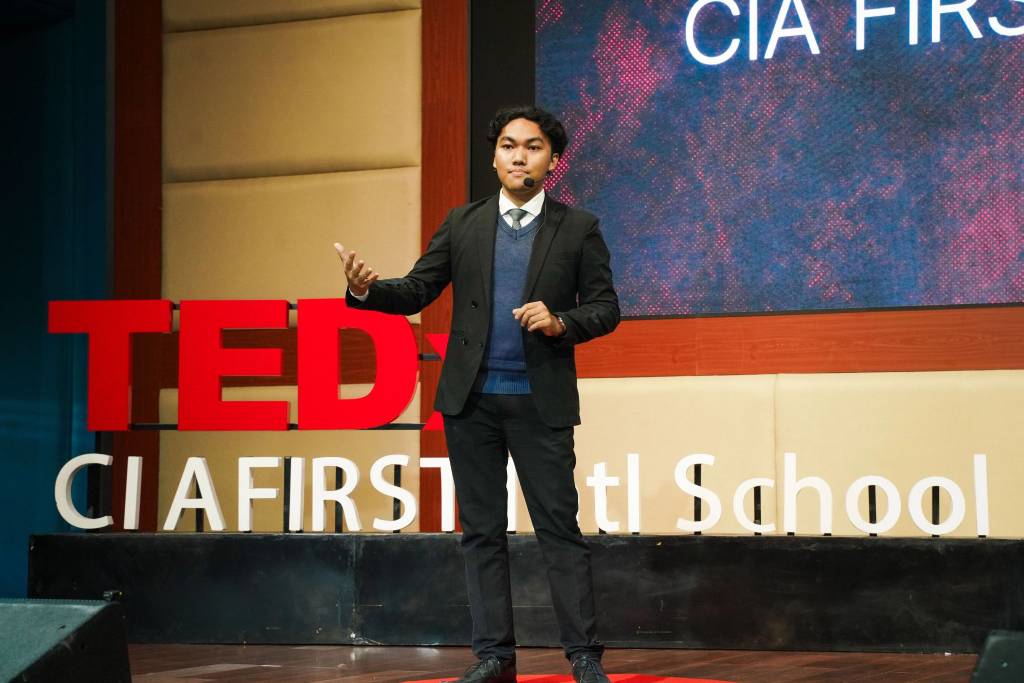
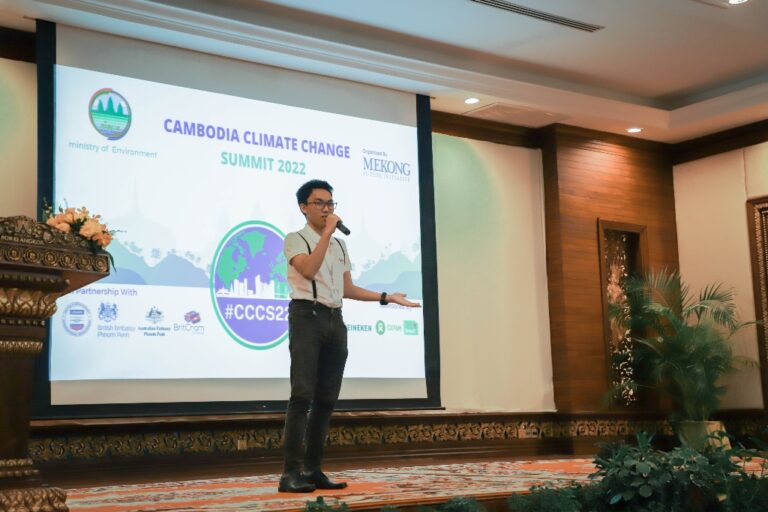
From his short study in US stint to his work in Cambodia, Saron turned his life experiences into his childhood dream: giving a TEDx talk, “The Audacity to Be More.” Source: Sovichea Saron
What’s the best way for students to know more about their local community?
Volunteering was a mandatory part of Global UGRAD that Saron had to do during his study in US, but for him, it was a great way to get to know the community.
He worked with a local environmental club that maintained a small garden, but what really made it memorable were the trips they took.
“We went to Salamander Springs, a private property owned by this sweet old lady,” he says. “We spent almost five hours gardening and exploring the property; it had little libraries, campfires, and all sorts of cool hidden spots.”
It did have one quirky rule: no phones were allowed. “But since I used a film camera, I was able to snap a photo of the owner,” he says. “She actually complimented me, saying it was a clever way around the rule.”
Saron also volunteered at a pet shelter and had an early morning adventure with “Adopt a Stream” where he drove out to test the oxygen levels at a local stream.

His study in US and Cambodia helped him develop leadership skills that led him to become the Network Manager of the STAR Secretariat, promoting sustainable textiles across Asia. Source: Sovichea Saron
Should you give up your “Study in US” dream because things are uncertain now?
To be fair, it wasn’t all sunshine and rainbows during Saron’s time abroad.
He was travelling in Florida with some friends, heading to an Airbnb. It was 3 am in a quiet neighbourhood, and the owner wouldn’t let them in because of some weird technical error.
They ordered an Uber, but got so tired waiting that they lay down on the pavement. Unfortunately, despite the driver seeing them, he made a U-turn and cancelled the ride.
“Honestly, if you see a group of college kids stranded like that, you’d expect someone to help,” he says. But no one did, not even the neighbours.”
In 2025, international students are facing even tougher realities.
Badar Khan Suri was detained by federal agents for allegedly “promoting antisemitism” on social media.
This came just after the arrest of Mahmoud Khalil, a Columbia University student protest organiser.
Plus, it doesn’t help that The Trump administration has repeatedly said that visas are a “privilege” and can be revoked at any time.
“It is incredibly disheartening to see how much has changed for anyone wanting to study in the US,” says Saron.
But he hasn’t lost hope. “There are still good people out there, kindness still exists, and friendships can still be made,” he says.
His own study in US journey is proof of that, saying “I didn’t expect a perfect trip. But I met wonderful people who made every challenge worth it.”
“The world, as harsh and grim as it looks now, isn’t black and white, it is made of countless colours. And if you look for it, you’ll find that beauty everywhere.”
Popular stories
Beyond the boundary: These are India’s most educated cricket players

EXO Kai’s LACOSTE era is serving elite energy — like the study history of past, present EXO members

History and … Public Health? The surprising education of the cast of ‘Scream 7’

Elite and exclusive: Universities with the toughest admissions criteria