

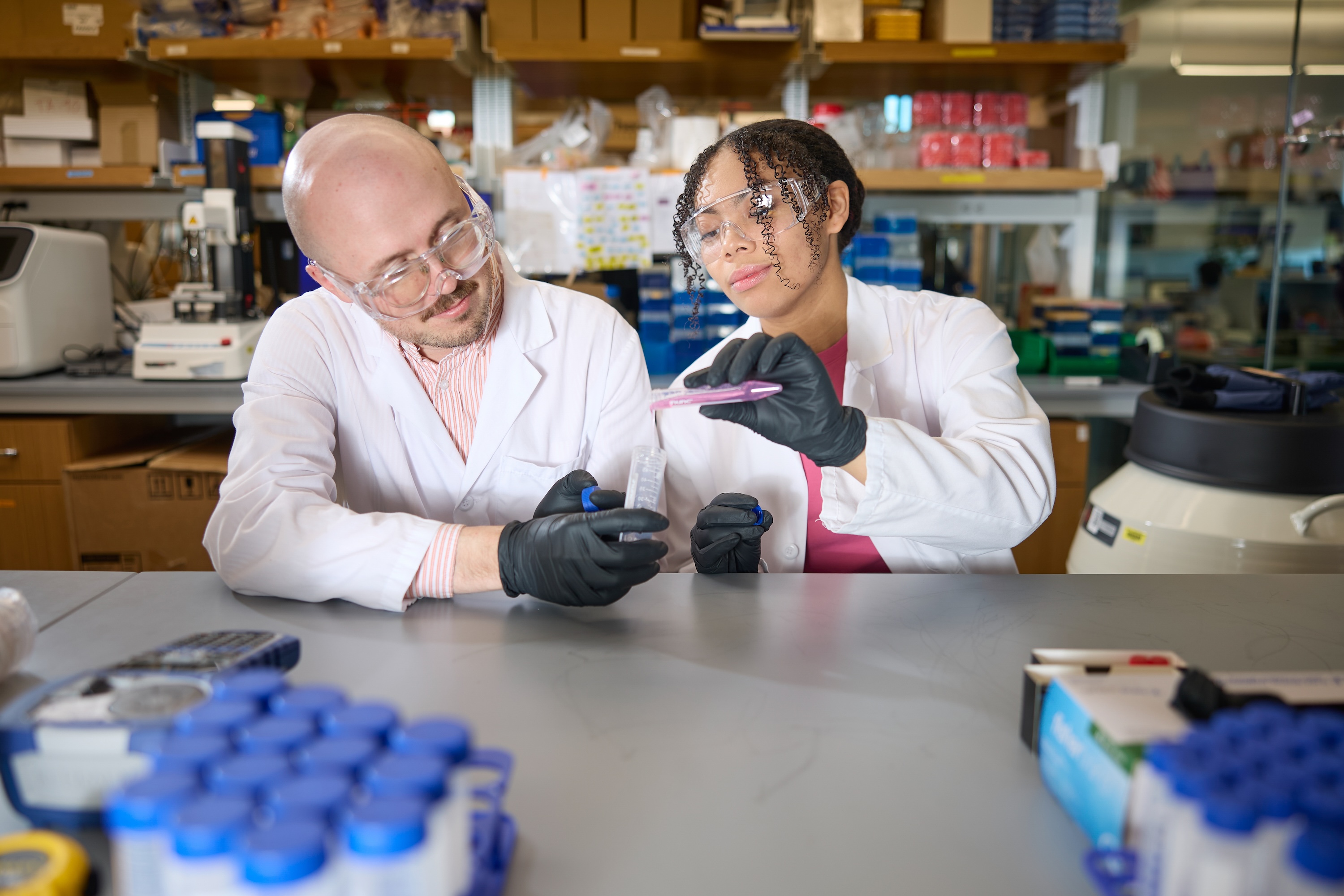


What are you looking for in an engineering master’s degree? Flexibility, mentorship, and opportunities beyond the classroom? Tufts University’s School of Engineering brings all three together, with 21 master’s and 15 certificate programmes supported by the full strengths of a top-ranked liberal arts college. As of October 3, 2026, application fees have been waived for all 2027 applicants.
With the resources of a world-class research university and faculty members invested in your growth, there’s plenty to explore as you gain expertise in your chosen field. If you’re studying on campus, you can go even further with the Graduate Cooperative Education (Co-Op) Programme and Dual Degree Master’s Programme.
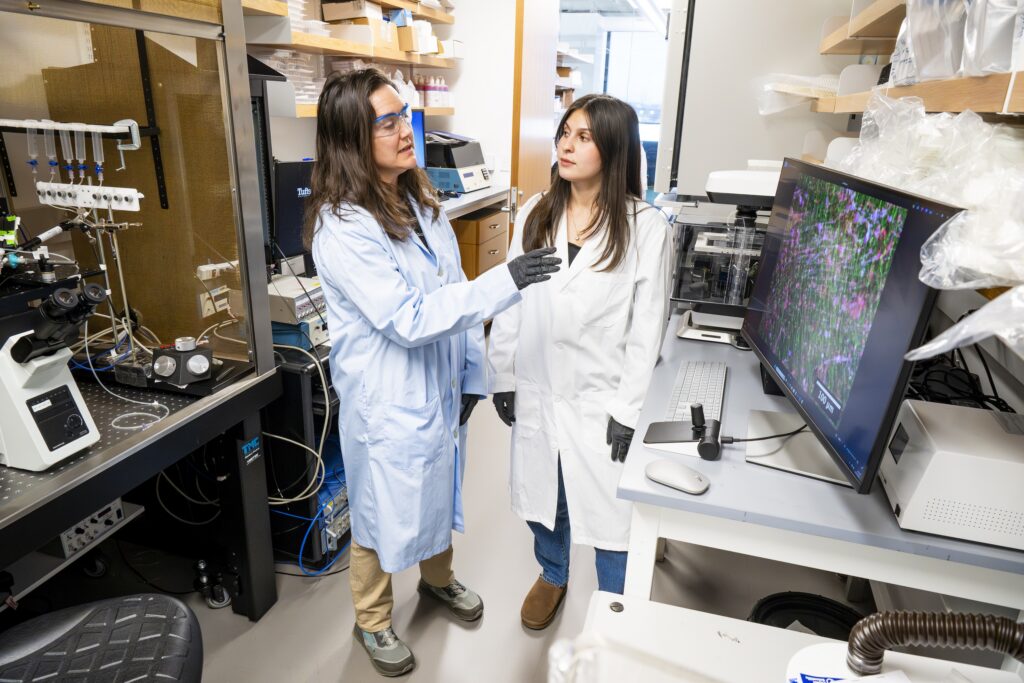
Modern labs and a collaborative community give Tufts University students the resources to take on research in intelligent systems, human health, and more. Source: Tufts University
Graduate Cooperative Education (Co-Op) Programme
What better way to prepare for an engineering career than by getting some real-world experience? The Graduate Co-Op Programme lets you work full-time up to six months with employers such as Dassault Systèmes, Johnson & Johnson, Massachusetts General Hospital, and Tesla. Meanwhile, career training, mentorship, and networking opportunities can help turn that experience into a clearer plan for what comes after graduation.
When M.S. in Cybersecurity and Public Policy student Anas Ansari worked as a cybersecurity analyst after his undergraduate degree, he was able to tell when something was wrong but didn’t always understand why. But through his graduate co-op as an Information Security Consultant at Strand Therapeutics, he could work directly with those systems, which gave him “a much deeper understanding of how and why they function the way they do,” he shared.
For M.S. in Bioengineering student Martin Ugwuoke, he was working in an Upstream Process Development Modelling role at Pfizer when he decided he wanted to work towards greater long-term opportunities in the field. “That realisation inspired me to apply to Ph.D. programmes next fall,” he said.
Ansari and Ugwuoke aren’t the only students seeing the value of their co-op experience. Across fall 2025 and spring 2026, 72 engineering students completed co-ops. “Instead of graduating a semester early, I’d highly recommend choosing the co-op,” said Varun Nair, who completed his at Johnson & Johnson MedTech – Heart Recovery and now works there full-time. “Especially in engineering, you’re going to feel a lot more prepared to enter the job market knowing that you’ve worked with real devices.”
Getting started is simple. You can let the university know you’re interested in your admissions application or apply to the programme in your first semester.
Dual Degree Master’s Programme
The Dual Degree Engineering Programme offers another layer of advantage: broader knowledge across two complementary fields – technology and business. As you save time and tuition from sharing coursework, you’ll be building expertise that makes you irreplaceable.
Start by choosing one of three business-focused programmes: the M.S. in Engineering Management (MSEM), M.S. in Innovation & Management (MSIM), or M.S. in Technology, Management, and Leadership (MSTML). Then pair it with an on-campus technical M.S. from one of the School of Engineering’s six academic departments. Some courses may count towards both degrees, which shortens the programme and reduces tuition costs. The result is a skillset useful for roles like technical product manager, engineering director, innovation lead, or technical founder.
Meghan Davis, for example, completed the programme with an M.S. in Biomedical Engineering and M.S. in Innovation and Management. “Gaining expertise in both business management and biomedical engineering expanded employment options for me, granting me the choice to move towards a career in business, engineering, or a blend of both disciplines,” she said. Today, she draws on both sides of her education as part of the Scientific and Strategic Investments team at the Massachusetts Life Sciences Centre (MLSC), where she helps scientists secure funding for their research.
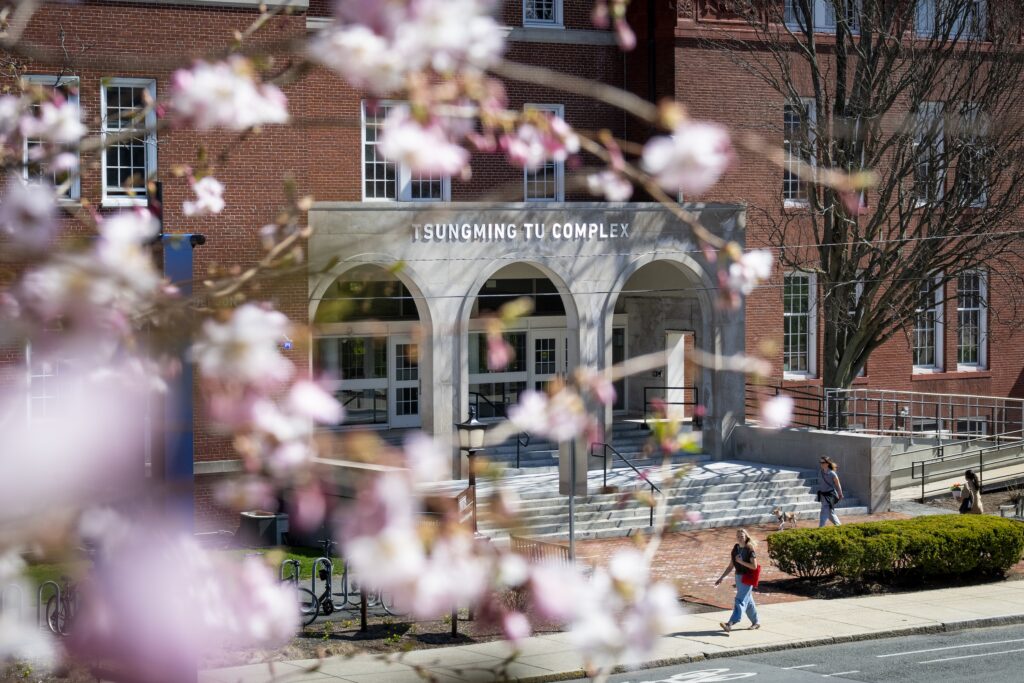
Tufts’s interdisciplinary programmes help engineering students build specialised knowledge while gaining real-world experience and leadership skills for their future careers. Source: Tufts University
A launchpad for your career
The skills you build at the School of Engineering could take you anywhere, but you won’t have to travel far to find a thriving technology industry. Downtown Boston and Cambridge are just a short subway ride away from the university. One of the world’s leading technology and innovation ecosystems, the area is home to companies such as Google and HubSpot, as well as organisations working in AI, robotics, cloud services, and other fast-growing fields.
What’s more, the School of Engineering offers partial tuition scholarships for a select group of engineering master’s and certificate programmes. When you apply for admission, you’ll automatically be considered; there’s no separate scholarship application or additional information required. Applicants are encouraged to apply by the priority deadline for the strongest scholarship consideration.
Whether you’re looking to advance in your current field or explore a new specialisation, Tufts University’s School of Engineering’s master’s degrees are for you. Flexible programmes, industry connections, and practical experience give you what you need to take your next professional step with confidence.
Follow Tufts University School of Engineering on X, Facebook, Instagram, and YouTube