


If you’re an engineer seeking a future that fuses sustainability and innovation, consider the following recent breakthroughs.
In 2024, researchers unveiled a water-soluble plastic that vanishes without leaving microplastics behind. This is consequential – if this can replace even 1% of e-waste, it could prevent 140,000 tonnes of toxic and carcinogenic materials from potentially entering the environment. Meanwhile, a significant leap in metamaterial technology is bringing us closer to the development of advanced 4D printed metamaterials that can change their shape and properties instantly.
A master’s in materials engineering can place you at the heart of the next big discovery. With labs expanding and industries investing, this is your moment to join some of the most dynamic materials engineering departments in the world today:
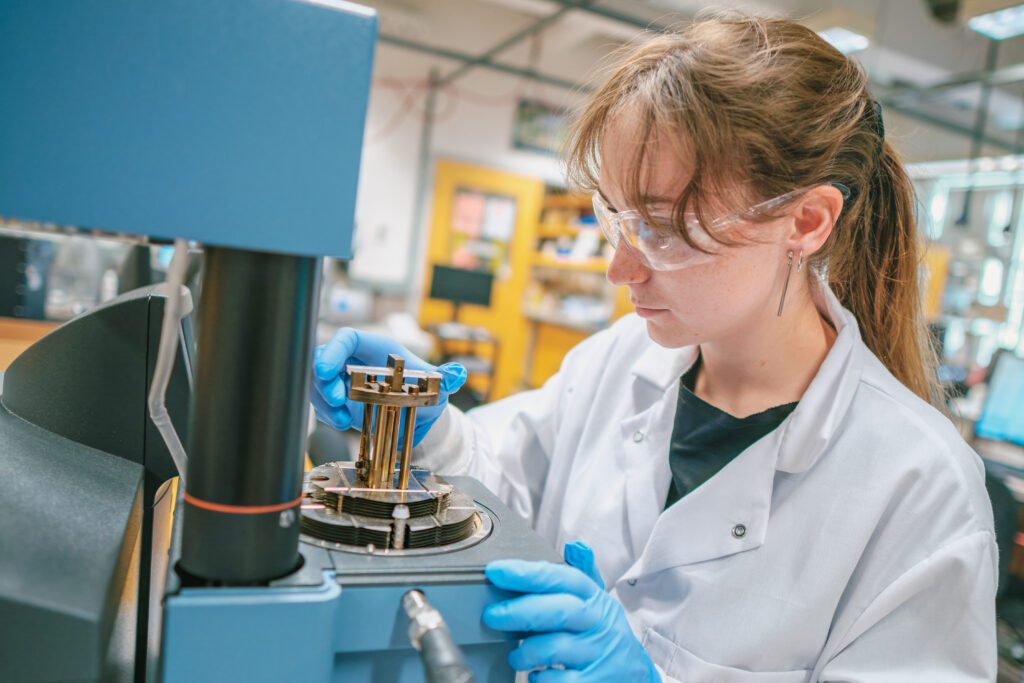
The Department of Materials Engineering offers research-based graduate programmes driven by real-world challenges. Source: University of British Columbia
University of British Columbia
Eight Nobel laureates, 66 Olympic medals, 23 3M National Teaching fellows – it is little wonder why the University of British Columbia (UBC) is consistently ranked among the top public universities in the world. Since its founding in 1915, UBC has grown to be a world-leading centre of teaching and research, with US$892.80 million in research funding for 9,992 projects and 260 companies spun off from UBC.
The Department of Materials Engineering stands out just as much with over a century of achievements and a rich history of innovation, located on one of the most beautiful campuses in the world. The department is home to six prestigious research chairs and a proven record of technology transfer, while consistently ranking among the top at UBC in research funding. As a graduate student here, you will be part of a broad and dynamic community shaping the future of materials engineering.
Graduate programmes offered include the two Masters in Materials Engineering – Master of Applied Science (MASc) and Master of Science (MSc) – and PhD in Materials Engineering. Whichever programme you choose, you’ll benefit from the faculty’s diverse research expertise which is applied to solve real-world challenges.
Research in the department is often in partnership with industry. They typically include a blended approach that develops and applies basic science to achieve meaningful and long-lasting societal impact, via a range of new theory, advanced simulation and experimentation. Take, for example, one of our assistant professors Dr. Kiana Amini, an expert in electrochemistry research, who is spotlighting three key technologies: redox flow batteries, electrochemical CO2 capture systems, and electrochemical extraction of lithium from brine. Her laboratory is looking into developing devices that can propel the transition to a cleaner energy future by advancing electrochemical aqueous flow cells for applications in energy storage, carbon capture, and lithium extraction.
Such is the calibre of faculty you’ll get to work with here – across a range of world-class labs and facilities. These include the Frank Forward Building and the Advanced Materials and Process Engineering Laboratory (AMPEL) where you can collaborate with materials researchers from Chemistry, Physics, Chemical-, Mechanical- and Electrical Engineering using industrial scale equipment and state-of-the-art characterization tools.
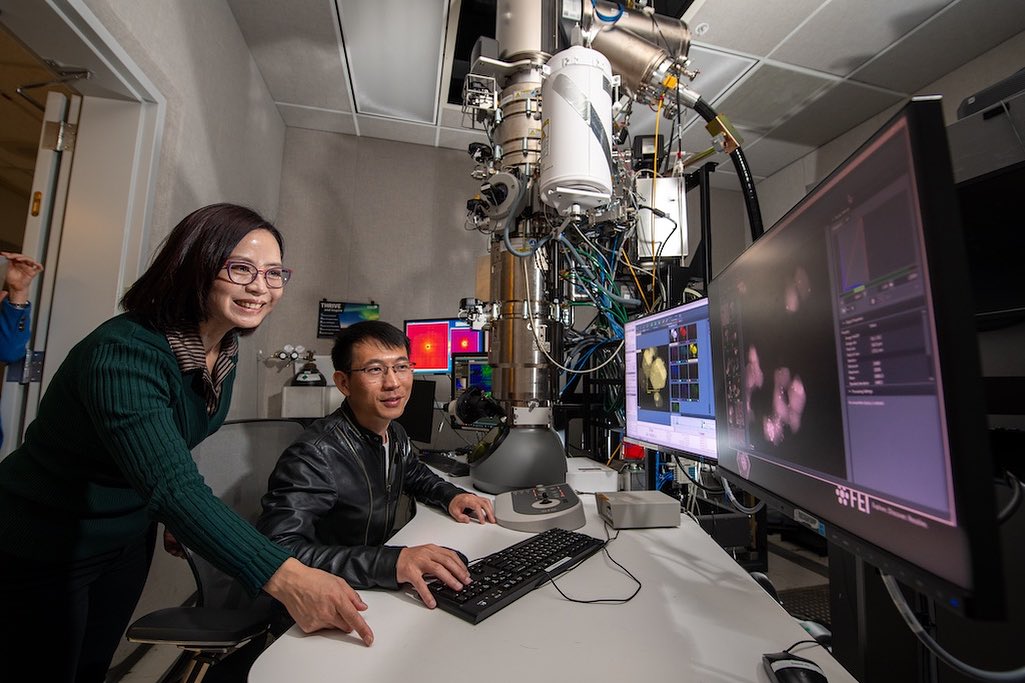
UC Berkeley’s MSE curriculum takes students through the timeless fundamentals while introducing modern-day approaches to materials. Source: UC Berkeley, Materials Science & Engineering Department/Facebook
University of California, Berkeley
US News ranks UC Berkeley’s Engineering graduate programmes third in the nation. “Our campus is one of the best places in the world to discover and develop your academic passions,” says Carol Christ, Chancellor.
“Our faculty — filled with dedicated teachers, thinkers, innovators, and explorers — is second to none. An exemplary team of staff members, committed to excellence in every facet of the university’s operations, works hard to support our academic mission. Our graduate students — whom you will know as mentors, researchers, and teachers — are among the best. And your classmates will be by your side to partner with you and challenge you throughout your intellectual journey.”
The Department of Materials Science and Engineering (MSE) is focused on innovation for the future. There are five main research areas: biomaterials, chemical and electrochemical materials, computational materials, electronic, magnetic and optical materials, and structural materials. The department also boasts many cutting-edge research facilities, both on campus and at partner institutions. These include the Nanofabrication Lab, the National Energy Research Scientific Computing Centre (NERSC), the Molecular Foundry (the National Centre for Electron Microscopy), and more.
The MSE curriculum takes students through the timeless fundamentals while introducing modern-day approaches to material problems. Guided by world-renowned educators, students undertake coursework and are part of faculty-led research groups. Students may choose to be part of one of the school’s main research areas or opt for a sub-discipline tailored specifically to them. Those with a more competitive nature should keep an eye out for the MSE awards, which are selected by the department based on nominations gathered from MSE students, faculty, and staff.
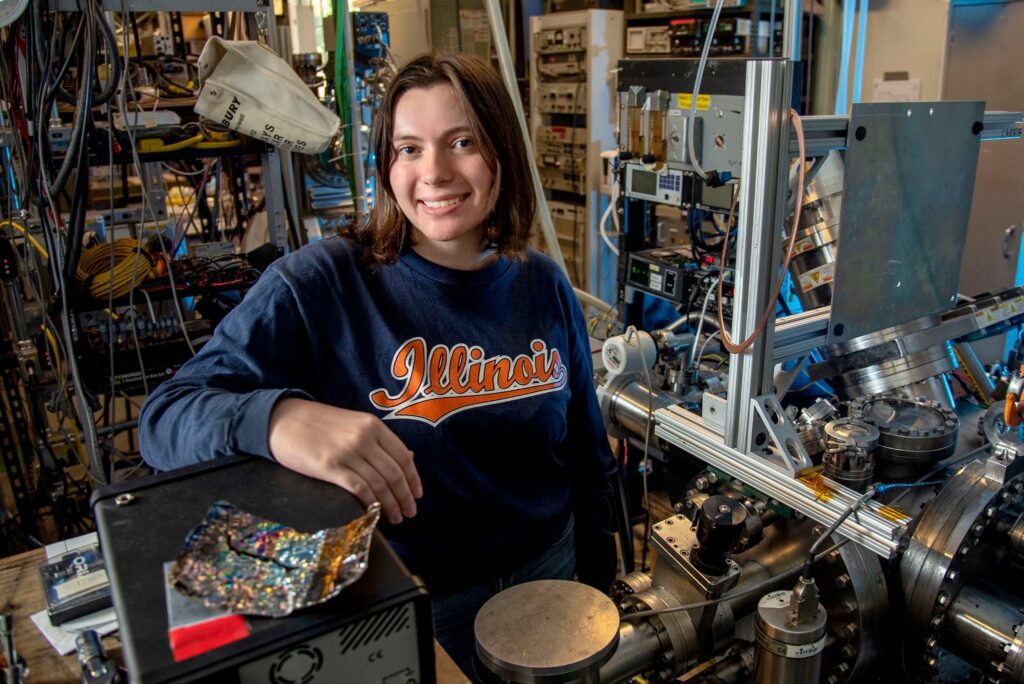
The graduate degrees are designed to expand your undergraduate training, enhance your professional skills, and gain the experience necessary to become a working scientist/engineer in the field. Source: Materials Science & Engineering at Illinois Grainger Engineering/Facebook
University of Illinois Urbana-Champaign
Founded in 1867, the University of Illinois Urbana-Champaign is today behind research that pioneers new ideas, new companies, and even new industries. Take the research done at the Department of Materials Science and Engineering, for example. From quantum materials that power tomorrow’s computing to advanced therapeutics transforming cancer treatment, teams here are revolutionising global solutions through bold cross-disciplinary collaboration and innovation.
The department focuses on six research areas: Advanced Manufacturing, Data-Driven Materials Discovery, Energy and the Environment, Electronics and Communications, Health and Medicine, and Infrastructure and Extreme Conditions. World-class infrastructure — featuring advanced characterisation, fabrication and testing capabilities – allow researchers to bridge fundamental science and pressing real-world problems. These facilities include Illinois Materials Research Laboratory (MRL), Beckman Institute, National Centre for Supercomputing Applications (NCSA), Coordinated Sciences Laboratory (CSL), Micro and Nanotechnology Laboratory, and Illinois Materials Research Science and Engineering Centre (MRSEC).
Your path to achieving the same can begin with a master’s or a PhD from this department. Both degrees prepare you to work in a promising and innovative career in academia, industry or at a national laboratory. For example, MS graduates go on to work for Intel, Lockheed Martin, Los Alamos National Laboratory, Micron Japan, and more. Others continue to grad school, the likes of the Federal Institute for Materials Research and Testing, Johns Hopkins University, Pennsylvania State University, University of Michigan, and more.
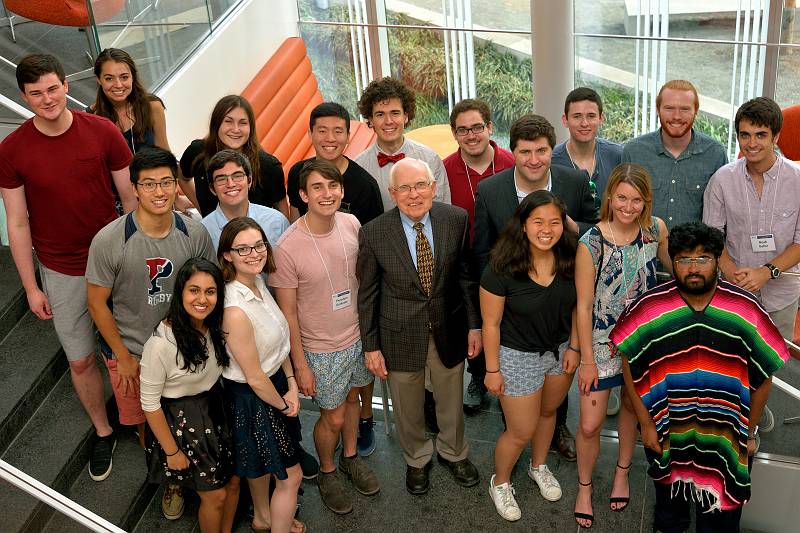
The Materials Science and Engineering department at Penn ranked 12th in the US for its graduate programmes. Source: Penn Materials Science Department/Facebook
University of Pennsylvania
Since its founding in 1740, the University of Pennsylvania has earned a reputation as a world-class leader that provides exceptional education, driven by intellectual rigour, ground-breaking research, and a commitment to inclusivity. Across its 12 graduate schools, each among the finest in their field, Penn creates thinkers and practitioners who are ready to redefine their industries. They are all driven by a common goal: to solve the world’s most pressing issues.
The Materials Science and Engineering department, ranked 12th by US News & World Report for its graduate programmes, offers a master’s programme in Materials Science and Engineering (MSE) that provides rigorous and advanced training. It is designed to prepare students for positions in industry, research and development, government or academia. The curriculum centres on the research areas of computational materials, electronic, optical and magnetic materials, microscopies and scattering, materials for energy, materials for health science, structural materials, polymers and soft matter.
What sets this programme apart is how it’s organised. Instead of traditional departmental divisions, it is organised around Graduate Groups. The MSE’s is a vibrant, multi-disciplinary group and consists of faculty from several departments in the School of Engineering and Applied Science, the Perelman School of Medicine, and the School of Arts and Sciences. It’s a structure that’s ideal to meet the complex technological challenges of this millennium.
As a student here, you’ll be co-advised by faculty drawn from diverse disciplines and facilities. These include the Penn Centre for Quantum Information, Engineering, Science and Technology (QUIEST), Centre for Soft and Living Matter, Centre for Engineering MechanoBiology, and Penn Institute for Computational Science (PICS), to name a few. With this comprehensive, well-rounded foundation, students emerge ready to make an impact. MSE graduates can be found at The Dow Chemical Company, Intel, Applied Materials, Palantir, Tesla, and L’Oreal, faculty, as well as in startups, national labs, and more.
*Some of the institutions featured in this article are commercial partners of Study International