


Education today looks very different from what it was a generation ago. Children are growing up in a screen-filled world, where asking questions out loud delivers instant answers. They jump between apps, ideas, and platforms with ease. For many parents, it can feel like the rules have changed overnight.
That’s why supporting a child’s learning journey can sometimes feel like stepping into unknown territory. But with patience, understanding, and a little help from a school that understands modern educational needs, like the Alice Smith School in Malaysia, parents can navigate this new landscape with confidence.
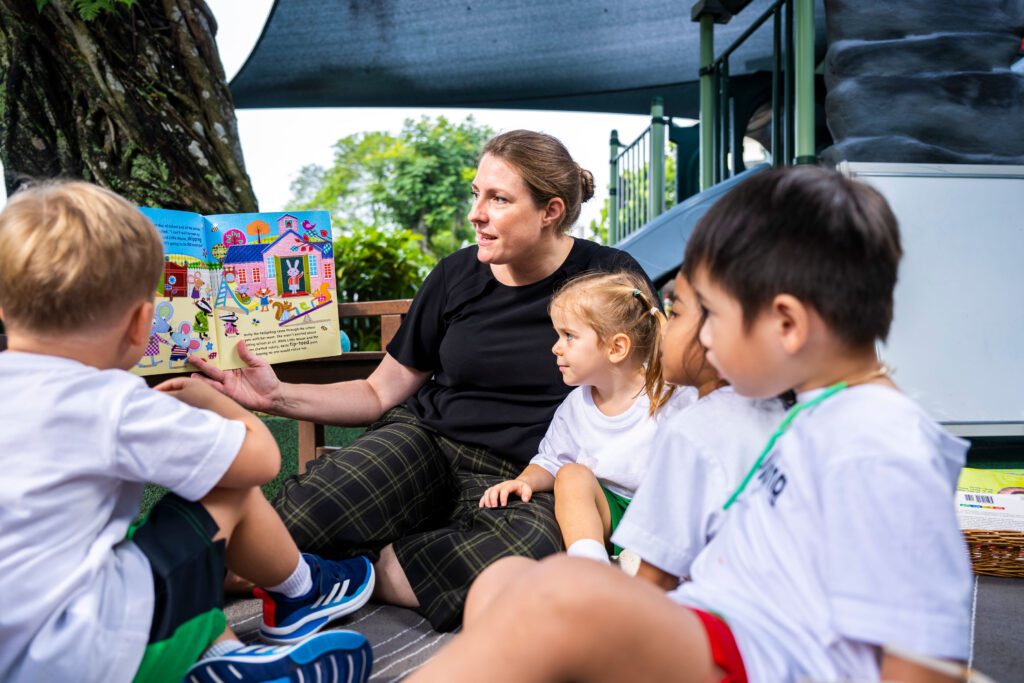
Alice Smith School’s success comes from excellent teaching, engaged students, broad learning opportunities, and strong support from staff and the community. Source: Alice Smith School
How is education changing?
Education is at a turning point, and few understand this better than Li-Kai Chen, former senior partner at McKinsey and former Global Head of Education. Drawing from decades of experience, he outlines three major global trends that are shaping the future of learning. “Everyone recognises that the most important skills moving forward are the ones hardest to automate by AI,” says Chen. These include cognitive abilities, self-leadership, and interpersonal skills such as negotiation, trust-building, critical thinking, and imagination.
The second trend involves the rise of learning science. Breakthroughs in happiness science and cognitive load theory are reshaping our understanding of how learning works. “The question now,” Chen notes, “is how educators can apply these insights both in and out of the classroom?” And finally, the role of education itself is evolving. “We’re seeing a major shift away from traditional models focused on knowledge and content,” says Chen. “Instead, there’s growing emphasis on skill- and competency-based learning, like storytelling and creativity.”
Learning you can trust
Chen points out another shift that’s been taking place in education: a growing use of data. “More and more educators and school leaders are embracing data-driven education,” he explains. “They’re looking at evidence, what works, what doesn’t, and using that to shape curricula.”
This emphasis on facts and informed decision-making is where the British curriculum stands out. “British education teaches students how to work with reliable information,” says Ruzina Hasan, Political Counsellor at the British High Commission. “This is important today because there’s so much disinformation in the world,” It’s why Hasan chose Alice Smith School for her children too. “The open space and overall feel just felt right for us.”

With open, sunlit campuses and a modern sports complex, Alice Smith School offers a vibrant place for learning and collaboration. Source: Alice Smith School
Proudly British
Alice Smith School is Malaysia’s oldest not-for-profit British international school for students between the ages of three and 18 years. “We’re a standalone school, and that gives us the agility to adapt fast and make choices that truly benefit our students,” explains Head of School Sian May.
This flexibility means every resource is focused on what matters most: helping young people discover their strengths, nurture their passions, and prepare for a world full of opportunity.
One of the ways Alice Smith School remains at the forefront of education is by continuously refining its curriculum to align with global trends. “We look to the very best of British schools — those who apply the English National Curriculum but go far beyond it,” says May. “We make sure they’re exposed to complex ideas, that they develop deep, thoughtful understanding, and that they can connect what they learn to their behaviour, their decisions, and their everyday lives.”
This progressive approach includes working with external partners outside the UK as well. For instance, Alice Smith School is collaborating with the University of Melbourne to develop new metrics for assessing skills and competencies.
“Before a student can show empathy, they need to understand the context deeply. That’s where academic rigour comes in,” explains May. “But we’re also focused on how well students can think through what they’ve learned and apply it in real-world contexts.” The school is even working with Teresa Forbes, a curriculum designer with experience across both national and international systems to embed executive function into its learning framework.
However, a world-class curriculum is only as effective as the teachers who bring it to life. “We’re constantly refining our recruitment process because we want educators who believe in the limitless potential of every student,” says May.
“It’s a global search. Our students are diverse, often multilingual, and have grown up in multiple countries as Third Culture kids. We need educators who reflect that diversity and have a deep love for what they do.”
Ultimately, the goal is for every child to be proud of who they are. “We build on the strengths of our past while staying focused on what’s ahead,” says May. “And to me, that’s the core component of a British education.”
Follow Alice Smith School on YouTube, Facebook, and Instagram