


If education is supposed a “great equaliser,” why is higher education still so inaccessible?
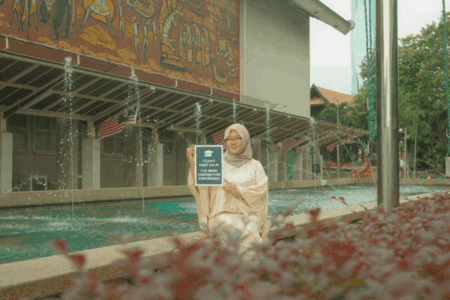
This question has been something that Chevening scholar Azida Azmi has been working to address for some time now.
Pursuing her Master’s at Columbia University in New York higher education, she began thinking more about the education system and its inequalities. We talk a lot about making schools accessible, but at the same time, we now frame education as a privilege rather than a right.
“How do we make higher education in Malaysia accessible in the sense of, like, how can scholarships be given to students who perhaps do not have all the top achievements, but they do have the drive to like contribute to society? But because they grew up in societies or households where like they did not have that many resources, they were not able to polish their CVs or their English which is needed to perform well during interviews?”
In other words, upholding meritocracy in education is not as fair as it seems, because it doesn’t account for existing inequalities, creating an unfair system where success is often determined by socioeconomic background rather than just merit.
“People usually say that education is the greatest equaliser, but then we realise that a lot of kids are still left behind in terms of opportunity and resources. So is that also not like a form of violence or like a form of conflict? Why are we not phrasing that as something that’s unequal to a lot of people? And how do we solve that?” she points out.
These were the questions that Azmi sought to answer with her first master’s in negotiation and conflict resolution.
But more than learning about it in the classroom, Azmi is also making a direct impact through her own initiative.
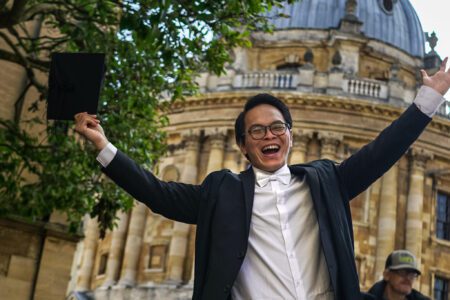
Azmi is pursuing her second master’s in social anthropology at University of Oxford. Source: Azida Azmi
She started a consulting service to help students
While doing her master’s in conflict resolution, Azmi began to grow frustrated with the inequalities in education that she witnessed.
“I was asking my professor like, you know, there’s only so much one can do, you know? So, when is change going to happen?” she says. “And then he started telling me you don’t have to have a suit on in order to enact change. You can do it the smaller this change can lead to the biggest impact, and that’s how I came up with this consulting service.”
The Ezzy Consulting Service is an organisation that provides mentorship to students, whether they are applying to study abroad or looking for a scholarship, or perhaps even job hunting as a fresh grad struggling to build and strengthen their profile. Azmi prioritises helping underprivileged students, such as those from low-income households.
Through the service, Azmi also conducts mock interviews for students, especially working with those who come from less privileged backgrounds. This helps them be much more prepared when they are going through the academic and post-graduation journey.
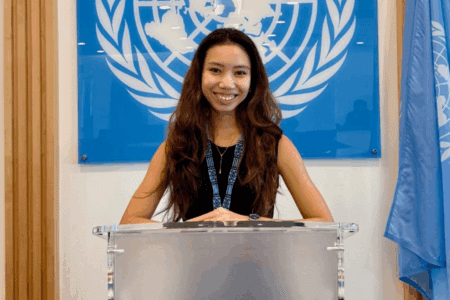
Wanting to better learn how higher education instituions assess students, Azmi also took the initiative to work as an admissions ambassador intern at the Columbia University School of Professional Studies while studying there.
“I don’t think that just reading reports on how higher education institutions are recruiting students are enough,” she says. “I wanted to see it from an insider perspective.”
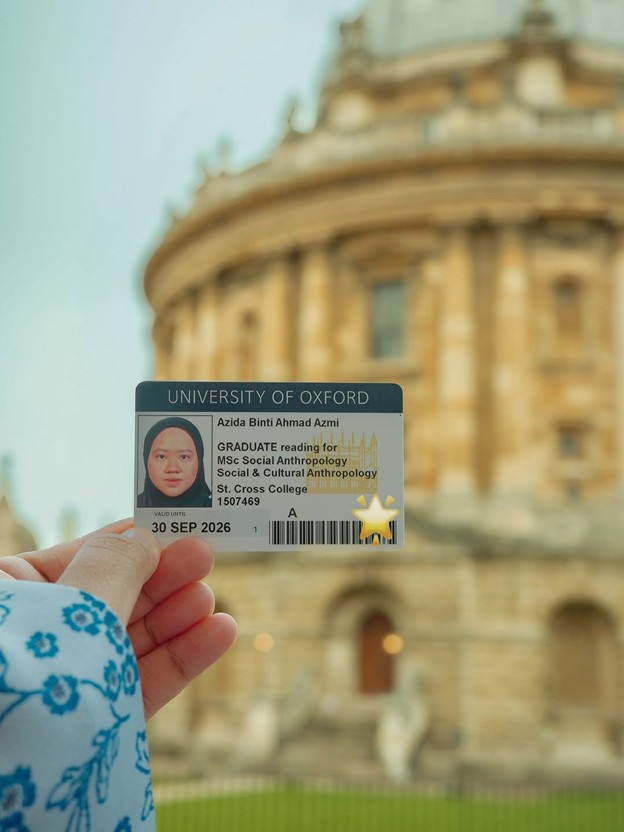
Azmi is a part of the St. Cross College in Oxford. Source: Azida Azmi
The importance of forming connections and building community
On top of that, Azmi has been connecting with peers in different fields such as STEM subjects to better support students looking for more specialised advice.
“Most of them are targeting for different things that I am well versed in, so I need a community of mentors worldwide who can give inspiration to the students I was mentoring as well,” she says.
As a Chevening Scholar now at the University of Oxford, she is even more equipped to find and connect with such mentors.
In fact, making is one of the most important things that a student could do. It’s something that has helped Azmi throughout her journey, and something that she advises others to practice.
“I think firstly, if you’re interested in pursuing higher education, whether that is locally or internationally, or applying to anything even, I think it’s very important for you to speak to as many people as you can,” she says. “The kind of insight that comes from speaking to people, whether it’s virtually or physically, is going to change you even just a little.”
Even a small bit of change, Azmi believes, is vital. Those small changes are like drops that create an ocean. She believes that she would not have the courage to study abroad if it were not for all the people who she spoke to that inspired her.
“I got that encouragement that I was able to push myself and tell myself hey, you’re not going to lose anything by trying. You just have to try first. The most important thing is to do first, think about it later,” she says. “Just do whatever you want first and then when the results come out, that’s when you start to think, where exactly do you want to go from here?”
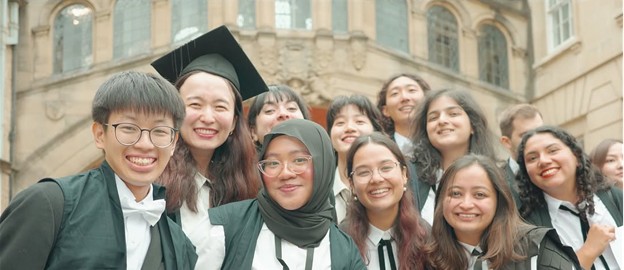
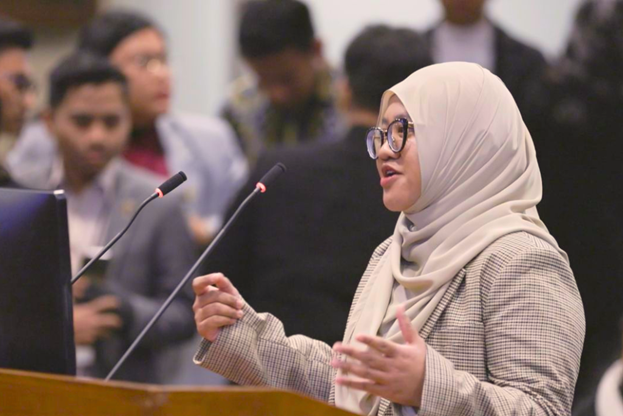
As a Chevening scholar, Azmi is now part of a global network of students and alumni. Source: Azida Azmi
Being intentional can help you persevere
One other thing that Azmi believes all students should do is to be very reflective of your intentions. Oftentimes, students can get swayed about what others are doing and following a specific pathway in life. Because of that, many often do not have a very grounded intention on what we do, and why we do it.
“I think being someone who’s very intentional in what I do really helps me. It has always been helpful in helping me to understand why this journey matters, and if I face rejection, why I am able to still pursue what I want to pursue,” she says. “Because my intention is still there.”
Popular stories
10 motivational quotes every student and worker needs in their life

11 severely endangered languages in the world

This Columbia University grad applied to Chevening as a “trial.” Now, she’s a scholar in Oxford.
Here’s how to get a job in an industry that no foreigner can enter in South Korea